|
A current assessment of the status of the snakes of the genera Cannia and Pailsus, including descriptions of three new subspecies from the Northern Territory and Western Australia, Australia. |
Raymond Hoser, PO Box 599, Doncaster, Victoria, 3108, Australia.
Phone: +61 412 777 211 E-mail: adder@smuggled.com
Originally published in Boydii - Journal of the Herpetological Society of Queensland Incorporated - July 2001, pages 26-60.
Abstract
In 1998 and 2000, this author described two new taxa, Pailsus pailsei Hoser 1998 and Pailsus rossignollii Hoser 2000. Both species are similar in most respects and in turn are closely related to King Brown (or Mulga) Snakes now known as Cannia australis (formerly Pseudechis australis).
General and descriptive information for these snakes (excluding Pailsus) can be found in Cogger (1993), Hoser (1989) and other general herpetological texts on Australian taxa. Ecological data for Cannia can found in Hoser (1989) and other texts. Captive husbandy information is found in Eipper (2000) and the many excellent references cited therein.
This information is not repeated here.
In the period since both descriptions were written further investigations have been made with respect to distribution and other aspects of the relevant species.
This paper, finalized and hereby dated "July 2001" adds light to the following obvious questions and/or points raised by this and other authors that may or may not have been fully addressed in the original descriptions, including:
1. A brief history of the original Pailsus descriptions.
2. The exact distribution of both Pailsus pailsei and Pailsus rossignollii.
3. Further details of similar taxa, including a snake described by Wells and Wellington in 1987 and since known in the herpetological community as "Cannia weigeli Wells and Wellington 1987".
4. Subspecies of Cannia australis and the status of other previously described forms.
5. Three new subspecies of Mulga Snake (Cannia australis), herein formally described as Cannia australis burgessi subsp. nov., Cannia australis newmani subsp. nov. and Cannia australis aplini subsp. nov.
6. An updated assessment of the relationships between species in both genera, with reference to previous conclusions drawn by other authors, including Smith (1982), Mengden, et. al. (1986), Greer (1997) and Wells and Wellington (1987) and sources cited therein for each.
7. Suggested pointers for other people to investigate.
8. Some comments on deliberate misinformation, lies and a case of scientific fraud perpetrated by Messers David Williams and Wolfgang Wüster.
9. A list of other relevant sources of information and papers.
10. A list of museum specimens examined to date by this author and notes on these.
Note: To view the photos published with this paper - click on the thumbnails.
Or Click here:

Introduction
Please note that for this paper, the classification system at the genus level first proposed by Wells and Wellington for "Pseudechis" as then known in 1983 and expanded on by them in 1985 is used.
This splitting of the original genus "Pseudechis" as understood by the likes of Cogger et. al. (1983) into three full genera has also been effectively supported by Greer (1997), by Shea, Shine and Covacevich (1993) and others.
In 1997, Greer echoed the previous conclusions of Wells and Wellington (1987) when he wrote:
‘Any discussion about the relationships of Pseudechis as a group has to be tempered by the fact that despite assertions to the contrary (Mengden, et. al. 1986, Shine 1987e), there is only tenuous evidence to suggest that this is a monophyletic group’.
Shea, Shine and Covacevich (1993) had earlier written:
‘Chromosomes, scale counts, general morphology, and blood protein electrophoretic patterns reveal that the viviparous P. porphyriacus is most divergent from the five oviparous species, which may be divided into two groups: P. australis and P. butleri, and P. colletti, P. guttatus and P. papuanus (Fig. 35.14).’
All this has served to confirm the earlier general arrangement for these snakes by Wells and Wellington into the three genera Pseudechis (comprising porphyriacus only), Cannia (comprising australis and butleri) and Paracedechis (comprising colletti, guttatus and papuanus).
In practical terms for readers, this means that for the major part of this paper the generic arrangement as per Hoser (1998b) is used, meaning that in most if not all cases here, the name Cannia has been interchanged with the former genus name used for australis, namely Pseudechis.
This author suggests that the general inertia by Australian herpetologists to adopt the generic placements as originally proposed by Wells and Wellington (above), including Greer (1997), by Shea, Shine and Covacevich (1993) and others, may stem in part from a general inertia to adopt "Wells and Wellington names", including a very real fear that use of such names by one publishing herpetologist may lead to potential ostracisation by another, (by way of example refer to Wüster et. al. 2001).
This author has no brief for the pair (Wells and Wellington), however in the absence of evidence to the contrary, feels bound to use the names he feels have been validly and properly assigned to the relevant taxa, noting the binding rules of the ICZN and it’s code in this regard, particularly with respect to the rules of nomenclature and priority.
Thus the Wells and Wellington classification is adopted here.
And yes, it can be said that this author accepts the risk of potential ostracisation by some other publishing herpetologists for being among the first to adopt what were in the 1980’s controversial name changes proposed by Wells and Wellington.
Partially in line with the above conclusions, this author erected a new genus in 1998 to accommodate a species of snake sympatric to, but specifically distinct to the King Brown or Mulga Snake (Cannia australis).
Diagnoses for the Genera Pailsus and Cannia have been provided elsewhere (see Hoser (1998b) for Pailsus and Wells and Wellington (1983) for Cannia. These papers more than adequately separate the relevant species from other Australian elapid genera and are not fully repeated here.
This new species, Pailsus pailsei Hoser 1998 is differentiated from the former species group/s by a suite of characteristics, including it’s higher ventral count, it’s generally smaller adult size, more gracile build and generally more aggressive temperament.
Based on morphology alone, the author determined that the species should be placed in what was then thought to be a monotypic genus.
In the area that Pailsus pailsei was originally known from, (Mount Isa district, Queensland), the species was further separated by it’s usually having all single subcaudals, versus a sizeable number (usually more than ten) divided.
Further investigations by this author and others in the intervening years to mid 2001 have not provided any evidence to contradict any of the points raised in the original description.
In the Mount Isa and nearby areas (north to Riversleigh), so far the only area Pailsus pailsei is definitively known from, the species is further separated from Cannia australis by it’s distinctive v-shaped rostral scale. In Cannia australis, the rostral is usually a distinctive horseshoe shape, a trait shared by most other "Pseudechis" species.
At about the same time, this author was made aware of the fact that a similar species was present in Irian Jaya and that was subsequently named as Pailsus rossignollii Hoser 2000. It is similar in most respects to Pailsus pailsei, but can be separated by it’s usually different subcaudal count (usually under 60 in Pailsus rossignolii versus 65 and 69 in the first two definitively known Pailsus pailsei) (also see references to later scale counts below) and more common frequency of a bluish-grey colouration on the head.
At the time the original description of Pailsus pailsei was published, this author stated that he hoped other herpetologists would investigate both this and similar species with a view to ascertaining factors such as distribution and other matters of relevance.
Save for a concerted campaign of misinformation orchestrated by David Williams and Wolfgang Wüster, little if any useful information came to light and/or was published.
However inspection of museum specimens in three states and other inquiries, has yielded information of relevance, some of which is detailed in this paper.
Applications to collect Pailsus pailsei have been lodged with the Queensland National Parks and Wildlife Service, but it is understood that as yet no permits have been issued (Peter Mirtschin, personal communication end 2000, Tim Nias, personal communication 2001).
John Weigel (Weigel 2001b), claims to have got approval to collect what he calls "Pseudechis weigeli" from the WA Wildlife Department (CALM).
To the extent that they have issued a collect permit (or at least given approval for same), the bureaucrats in the department deserve a commendation.
A brief history of the Pailsus descriptions
In 1998, this author was promoting and selling copies of his book The Hoser Files - The Fight Against Entrenched Official Corruption (Hoser 1995) in Ballarat (Victoria). The author visited a prominent local herpetologist, Mr. Roy Pails. As per most visitors to his residence, Pails showed this author what he alleged was a new species of "King Brown Snake".
Pails had been doing this for most herpetological visitors for several years and had in fact come under scrutiny from the local wildlife authority (DNRE) in relation to his unusual snakes.
Previously, officials with the local authority had taken extra time to inspect these snakes and concluded that they were in all probability a variant of Cannia australis, as was recorded on Pails’ record books and no action was taken against him.
Legal action against Pails had been considered, but the idea was dropped after the department was unsure as to what, if anything they could charge him with in connection to these snakes.
During the 1998 visit, Pails asked this author to describe the snake as a new species and the author immediately commenced inquiries.
For the record, Pails has also identified other as yet undescribed reptile taxa.
In terms of the new snake, Pails was first asked by this author to justify why his snake was "different".
He gave a host of explanations. However none of them satisfied this author as being diagnostic in that they could definitively separate the snakes (Cannia australis versus this new species).
A subsequent scale count of this "new" species and a series of "normal" Mulga Snakes (Cannia australis) by the pair of us revealed consistent differences in subcaudal counts and the size and shape of the rostral (top-snout) scale between specimens of each species from the same area. Coupled with the suite of other characteristics already outlined by Pails (smaller adult size, slimmer more gracile build, etc., all of which on their own could be said to fit within the normal range of C. australis) this author was satisfied that we had a new and sympatric species.
As the species were sympatric and clearly different, there was no need to engage in molecular biology methods to separate the two and so none was done.
The fact is that most species of reptile known to science were described without having their DNA inspected and claims to the contrary are lies.
However before this author could go ahead and describe the "new" species we had to do a check of the literature to see if there was any descriptions that already fitted the "new" species and had somehow been overlooked and/or later erroneously placed in synonymy with C. australis.
This part was a straight forward process of elimination.
A check of Cogger et. al (1983) and Wells and Wellington (1983 and 1985) revealed several other descriptions since regarded by most authors as being redescriptions of C. australis and/or regional variants.
Through a process of further elimination we were able to ascertain that none of these were of the same "new" species Pails had.
Again the process was simple. In most descriptions the scale counts alone excluded the snakes, while for those which lacked this information, we were able to go to the institution and look at the type and/or contact the relevant curator to do this for us.
Further telephone checks with people at these various institutions and what are best described as well-informed amateurs revealed no other "descriptions" of relevance to our "new" species.
This author then published the description of this snake calling it "Pailsus pailsei" (Hoser 1998b).
And because of his contribution to herpetology, the species and genus was named in honour of Pails.
In terms of scientific descriptions, the whole process was very boring and routine.
The story in regards to Pailsus rossignollii is also similar.
In a casual phone conversation between Italian herpetologist Joe Mara and this author, Mara mentioned a "King Brown Snake" that he had, that hadn’t grown more than three feet in length and he thought may have some kind of unknown ailment.
Further questioning led this author to ascertain that the snake was in fact "Pailsus", which of course explained the relatively diminutive size of the specimen.
Mara also advised it was from the island of New Guinea.
Further inquiries to all relevant institutions and other relevant sources, such as keepers, dealers and the like revealed that all so-called King Brown Snakes from New Guinea were in fact of this species and that it was sufficiently different from the two known Australian specimens to be placed in a separate species.
That description was then submitted and to and after some unexpected delays, published in Litteratura Serpentium in 2000.
During all these periods of inquiry there was never any secret in the fact that this author was describing these snakes and all letters, e-mails and the like sent all over the place to dozens of individuals consistently made this point clear.
Furthermore there was never any indication in relation to any of these descriptions that other people intended describing any of them and based on the information just given, there was no reason to suspect anyone was intending to do so (more on this later).
Materials and Methods
The basis for the information detailed in this paper was the inspection of museum specimens, live captive animals, and a survey of all relevant (and available) literature, private keepers and the like.
Central elements of this (still ongoing) study included to ascertain the relative status of snakes of the genera Pailsus and Cannia as defined by Hoser (1998b), distribution of and comparisons between "Cannia weigeli" and Pailsus pailsei, and to identify any hitherto unnamed taxa.
Herein follows a brief outline of the material examined.
A list of museum specimens inspected by this author follows later in this paper. Full collection details for those specimens examined are available from the institutions named and have been provided to this author as excel files. These have been placed on the internet and are available for download by following the relevant links from:
http://www.smuggled.com/boycan1.htm
This author has been able to inspect the entire available holdings of "Mulga Snakes" (Cannia australis) at the Queensland Museum and a number from the Australian Museum in Sydney. Furthermore this author has examined a sizeable number of captive specimens from various parts of Australia.
The Museum samples examined by this author have included specimens from all mainland states, excluding Victoria.
Ultimately this author hopes to inspect all available specimens in all State Museums on mainland Australia, as time and other commitments permit.
Neil Sonneman in 2001 inspected specimens labeled as C. australis held at the Western Australian museum. He provided this author with copies of his photos and notes, including details of the holotype of the snake named by Wells and Wellington as "Cannia weigeli".
The exact distribution of both Pailsus pailsei and Pailsus rossignollii
Obviously this is not yet known and probably never will be.
However there has been considerable misinformation and speculation on this topic published on the internet by various persons and it is therefore appropriate to publish this author’s recent findings in this regard.
By way of example, in a post dated: Sat, 3 Feb 2001 11:20:02 +1100 on australianherps@yahoogroups.com John Weigel claimed to have inspected large numbers of "King Brown Snakes" in Museums and found lots of Pailsus pailsei/Cannia weigeli from the top end of the Northern Territory, going on to state that it was a common species. Weigel even asserted that the type specimen of "Pseudechis australis" was in fact a Pailsus pailsei/Cannia weigeli.
He then claimed to have lost his data in the big reptile park fire of mid 2000, and thus his claims went effectively unsubstantiated.
This author knew Weigel was wrong about the latter argument.
You see we had already ascertained that the type specimen of P. australis was NOT Pailsus pailsei/Cannia weigeli. The subcaudal count alone excluded that possibility!
(For the record, the type specimen of C. australis has 41 single subcaudals followed by 23 divided, a 94 cm snout-vent and 17.2 cm tail (also see McCarthy 2001)).
To date Pailsus pailsei is thought to be sympatric with Cannia australis in all known localities for the former species. Refer to Hoser (1998b) for details.
The same applies for the snake known as "Cannia weigeli". Refer to later in this paper for details.
A detailed distribution map for Cannia australis based on the holdings of the Queensland Museum has been published by that institution by Ingram and Raven (1991). The species is found over most of the state, save for the far south-east.
A detailed distribution map for the species Cannia australis in Western Australia based on the holdings of that State’s museum was published by Smith 1982.
The species as described by Smith 1982 is found in most of the State save for parts of the far south.
Cannia australis as described by Cogger 1983 (as "Pseudechis australis") and others is found in most, if not all parts of the Northern Territory.
Cannia australis as described by Cogger 1983 (as "Pseudechis australis") and others is not known from Victoria, but may occur in the north-west of the State.
It is found in most arid parts of north-west NSW and likewise for South Australia.
Further distribution information for the species is provided by Cogger (1992), Hoser (1989), Longmore (1986), Wilson and Knowles (1988) and Worrell (1972).
Pailsus pailsei remains known only from north-west Queensland in the general vicinity of Mount Isa (see below for details). While the distribution of this form may extend beyond this area, it is now thought relatively unlikely.
Similarly "Cannia weigeli" remains known only from the Mitchell River area of Western Australia (the type locality) and almost certainly does not extend beyond the Kimberley district.
Pailsus rossignollii remains known only from Irian Jaya, in the general vicinity of Merauke and to a lesser extent, west of there.
While it may be found to the east, in Papua New Guinea, this author knows of no specimens.
Furthermore there is no evidence to rebut the assertion by Hoser (2000) that Cannia australis does not appear to occur on the Island of New Guinea.
A snake described by Wells and Wellington in 1987 and since known in the herpetological community as "Cannia weigeli Wells and Wellington 1987"


 Following publication of the original description of Pailsus pailsei Hoser (1998b), this author received a phone call from Richard Wells.
Wells stated that he had described a similar snake in 1987 and named it "Cannia weigeli".
Hoser called on Wells to provide a copy of this "description" but Wells said he didn’t have a copy.
Subsequently, John Weigel e-mailed the author with the same story, but also said he didn’t have a copy of the description.
Checks of the Australian and Victorian Museums also failed to locate a copy of this alleged description. The persons spoken to claimed ignorance of the "description", which wasn’t altogether surprising, as this concurred with the author’s inquiries preceding the publication of the first Pailsus description.
Sometime after this, (31 October 1998 to be exact) , Peter Mirtschin faxed this author a copy of this "description", having himself received the "paper" by fax from co-author C. Ross Wellington the same day.
This "description" if that’s the correct word, was written by Wells and Wellington in 1987. It consisted of a typed "paper" and line drawings that was then photocopied and disseminated.
As far as this author can ascertain, only a handful of copies were ever distributed. It was never published in a journal as such and based on the fact that it was merely presented in the form of a few photocopied sheets, it possibly failed to fit the ICZN’s code, namely section 8.1.3. which says to be published properly and in accordance with the code "it must have been produced in an edition containing simultaneously obtainable copies by a method that assures numerous identical and durable copies." (see below).
In this author’s view, the relative lack of copies and the relatively undurable nature of the publication (mere sheets of paper) may mean that the publication is not valid within the bounds of the ICZN’s code.
The content of the description itself, several pages in length, certainly comply with the rules of the ICZN as applied at the time, even if this author disagreed with some of the taxonomic conclusions drawn in the same paper following the formal description of the type specimen.
Further conversations with Richard Wells led to Wells telling this author that he thought that Pailsus pailsei and Cannia weigeli were probably separate species or at least subspecies, with no Pailsus being known from the intervening parts of the Northern Territory.
Wells stated that he agreed with the erection of the new genus Pailsus and that "his" species "weigeli" should be transferred to the genus Pailsus.
At that time the whereabouts of the alleged type specimen of "Cannia weigeli" was not known so this author was effectively unable to proceed further with inquiries into the matter.
Wells directed this author to the Australian Museum (in Sydney) who subsequently directed this author to the West Australian Museum (Perth). The former institution (Ross Sadlier) said they had sent the type specimen to the latter institution.
In 2001, following the e-mail campaign against this author by Williams and Wüster on the internet, Glen Shea contacted this author on 5 February via e-mail (Shea 2001) to tell what he knew of "Cannia weigeli".
He stated that he had published a mention of the Wells and Wellington description in Herpetofauna the following year (by way of synonymy with P. australis) (Shea et. al. 1988) and that he also regarded the Wells and Wellington "paper" as being validly published and/or the Herpetofauna reference somehow validating the original description.
A check of the Shea et. al. paper in Herpetofauna confirmed what Shea said was correct. It also indelibly gave the Wells and Wellington description priority in terms of date, over the Hoser descriptions.
In March 2001, Jeanette Covacevich told this author that by her interpretation of the ICZN rules, she disagreed with the assertion that the Wells and Wellington "paper" (Wells and Wellington 1987) was "published" and/or validated by Shea et. al. 1987.
There have been mixed views on this point expressed to this author by numerous herpetologists, some of whom appear to have axes to grind in one direction or other (not those named above) and as seen by the results published in this paper, the final determination of this matter by herpetologists (other than this author) will probably have no impact on the ultimate acceptance and usage of the species names pailsei and rossignollii as assigned by this author. The reason being that the three names weigeli, pailsei and rossignollii all identify three distinct taxa.
For the benefit of readers of this journal who may be confused, the earlier Wells and Wellington papers published in 1983 and 1985 were published in a proper magazine style journal called the "Australian Journal of Herpetology".
The "Cannia weigeli" description was not.
Thus this author was in a situation whereby the Cannia weigeli description had been effectively overlooked due to the fact that next to no one, including those who should, knew of it.
If nothing else, it appears that Wells and Wellington failed one of the ICZN Code’s recommendations to widely disseminate their "paper".
However in defence of the pair, they were at the time busy fighting a rearguard action to "save" the names they’d proposed in a total of 357 taxonomic and nomenclatural acts/changes in relation to Australasian herpetofauna (in three papers) in the face of actions by other Australian herpetologists to have them suppressed by the ICZN, and so the pair were probably otherwise preoccupied. Refer to Anonymous (1987) and later publications in the Bulletin of Zoological Nomenclature relating to ICZN case number 2531 for details.
What was 100% certain to this author by end 1998 was that "Cannia weigeli" and Pailsus pailsei were very similar, if not the same.
The picture of the relationships between the two have now become somewhat clearer.
The two forms, weigeli and pailsei are different taxa (see below) and therefore should carry separate names.
Throughout the period 1998-2001, Wells and Wellington and this author have been united on one important aspect. This has not been so much, what the snakes are ultimately called and/or who is listed as the describer, but rather that they are identified as distinct species and named properly as per ICZN rules.
Thus in this respect at least, we have been united as one.
Finally and notwithstanding the comments above, this author suggests usage of the name "weigeli" be preserved unless and until the ICZN is called upon to rule otherwise and after such ruling is made.
For the first time ever, photos of the holotypes of "Cannia weigeli" and "Cannia centralis", both formally named by Wells and Wellington in the 1980’s are published with this paper as an aid to assist other herpetologists in forming their own views about the taxonomy of these snakes.
Pailsus specimens known to date
Inspection of the entire available holdings labeled "Cannia australis" at the Queensland Museum revealed just one further specimen of Pailsus pailsei. This was specimen number J59015 from Mary Kathleen Dam, Qld. Lat 20.47 S Long 139.59 E.

 The snake was a mature male and relatively light in colour (as compared to typical Cannia australis). It had 64 single subcaudals (none divided), a wide v-shaped rostral typical of the species and a divided anal plate.
In an oversight, we failed to count the ventral scales.
All other specimens inspected were confirmed as Cannia australis.
A later inspection of a sizeable sample of "C. australis" from "likely locations" (translated to be the northern third of Australia, excluding most of Queensland) at the Australian Museum, revealed just one specimen of Pailsus pailsei. This was specimen number R11359 from Lilydale Spring, Riversleigh Station, Queensland (Lat. 138.45 E, Long 19.50 S).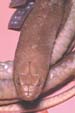
 The snake was like other Pailsus pailsei in being a relatively light animal, but this may in part be due to the fact that it had been collected in 1934. It had 65 single subcaudals (none paired), 219 ventrals, 17 mid body rows and a divided anal plate.
The snake’s sex was not determined, but it had no everted hemipenes. The specimen measured 110 cm total length, with a 92 cm snout-vent.
Thus in reality, the known distribution of Pailsus pailsei remains effectively confined to the hilly country around and north of Mount Isa, in Queensland, covering a known (straight line) distance of about 150 km of relatively uninhabited and unexploited country.
Also see further relevant comments below.
No snakes conforming to "Cannia weigeli" were inspected by this author. However Cannia australis from the Kimberly district, WA, were inspected by this author, indicating that it is sympatric with "Cannia weigeli".
 Typical of these snakes was specimen number R111021 from the Australian Museum. This was an adult male from the Mitchell River area of Western Australia (Lat. 125.45 E, Long 15.45 S), the type location for "Cannia weigeli", which was otherwise typical for Cannia australis. It measured 195 cm in total length, 170 cm snout-vent, with 201 ventrals, 42 single subcaudals (excluding numbers 35-36 which were paired), and 14 divided subcaudals, excluding number 3 of these which was single.
(Note: the counts run from the anterior end).
The snake had 17 mid body rows and a U-shaped rostral which is fairly typical of Cannia australis.
Wells and Wellington (1987) give a detailed description of their "Cannia weigeli" snake, including it’s having 17 mid body rows, 222 ventrals and 75 subcaudals (allegedly all single).
No snakes of intermediate characteristics were found from this immediate region, indicating sympatry between the forms - in line with Queensland Pailsus.
The type specimen of "Cannia weigeli" is from here on identified as Pailsus weigeli.
It bears the Australian Museum tag R123995 and WA Museum tag R98871. It is separated from Pailsus pailsei by a suite of characteristics including the following:
A sizeable amount of dark pigmentation on the head and neck scales. This amount is unknown in Pailsus pailsei.
The front nasal scale has a distinct protrusion into the rostral in Pailsus weigeli, while in Pailsus pailsei it runs more or less flush to a single line created by the merging of the borders of the supralabial, nasal and internasal. Because of damage to the head of the type specimen of Pailsus pailsei this is best illustrated by comparing the photos of the Pailsus weigeli type and the Pailsus pailsei depicted on the cover of Monitor 10 (1) 1998 (see Hoser 1998b), and/or looking at the head or photos of Australian Museum R11359 and/or Queensland Museum J59015.
In Pailsus weigeli the third supralabial is relatively large and elongate (rectangular shaped) (the long sides running towards the top of the head), as compared to the same scale in Pailsus pailsei.
Correspondingly, the preocular is much smaller in Pailsus weigeli than in Pailsus pailsei.
In most other respects Pailsus weigeli is essentially similar to Pailsus pailsei.
The known distributions of the two snakes are also separated by a vast distance (well over 1000 km in a straight line).
The colouration of the type specimen of Cannia weigeli conforms with Smith’s 1982 account of juvenile C. australis from the Kimberley region.
Based on this author’s own inspections of C. australis from most of Australia, dark markings on the head and neck are not uncommon in younger specimens of C. australis from some locations and as Smith asserted, they tend to fade with age.
However it remains uncertain if any of the specimens inspected by Smith were in fact C. weigeli.
Since the description of Pailsus rossigollii several private keepers in the northern hemisphere have come forward to advise this author that they possess the species and/or done likewise via the "Kingsnake.com" forums.
All specimens identified as such have conformed to the species as identified by Hoser 2000 and based on subcaudal scale counts received to date, the diagnostic differences between Pailsus rossignollii and Pailsus pailsei remain 100% applicable in terms of separating the species in the absence of any other available data, (as in the usually lower subcaudal counts for the Irian Jaya species).
In spite of this, Messers Williams and Wüster have made a point of deliberately creating confusion by making numerous posts claiming authority on these snakes and then trying to lead these people to believe that they merely have unusual looking Cannia australis (see later).
However by virtue of the fact that nothing further of substance has been published on these snakes and that all further known specimens continue to derive from the Merauke area of Irian Jaya, little further knowledge of the species is yet available.
Pailsus rossignollii is separated from Pailsus weigeli by several characteristics including it’s different head colour, relative lack of dark blotches and makings on the forebody and other characteristics.
In the original published description of "Cannia weigeli" Wells and Wellington state that the type specimen has all single subcaudals. But from the photos seen by this author, it appears that the last two may in fact be divided. However such a feature (if present) does not appear to alter the present status of this species or others that are similar (Pailsus pailsei, Cannia australis), as such a trait (paired subcaudals in limited number) has already been seen in Pailsus pailsei and it has been clearly demonstrated by Pails that it is specifically different to Cannia australis (see Hoser 1998b for further details).
Cannia australis and the status of other previously described forms
For a taxa such as Cannia australis (recognized here as all snakes previously known as "Mulga/King Brown" snakes, excluding Pailsus), with a near Australia-wide distribution and known regional variants, it is obvious that there must be a number of different species and/or subspecies within the group. Authors have traditionally lumped all together under the one label, or in the other extreme tended to split off a number of regional variants as new species (like Wells and Wellington 1985), a view apparently shared by a number of other respected Australian herpetologists.
Further complicating things has been a higher than expected degree of variation within a single locality, particularly in the Centralian and West Australian parts of the range, as well as clinal variation between regions (as noted by Smith (1982)).
Previously assigned names include the following; derived from Cogger et. al. (1983) and Wells and Wellington (1985):
Naja australis Gray, J.E. (1842). Description of some hitherto unrecorded species of Australian reptiles and batrachians. in Gray, J.E. (ed.) Zoological Miscellany. London : Treuttel, Wdrtz & Co. pp. 51-57 [55). Type data: holotype, BMNH 1946.1.20.39, from Port Essington, N.T.
Pseudechis darwinensis Macleay, W. (1878). Notes on a collection of snakes from Port Darwin. Proc. Linn. Soc. NSW 2: 219-222 [220]. Type data: holotype, AM R31927, from Port Darwin, N.T.
Pseudechis cupreus (part.) Boulenger, G.A. (1896). Catalogue of Snakes in the British Museum (Natural History). 3. London : British Museum xiv 727 pp. pls 25 [329]. Type data: none; description based on literature, from "Murray River", NSW./Vic.
Pseudechis denisoniodes Werner, F. (1909). Reptilia exkl. Geckonidae und Scincidae. in Michaelsen, W. & Hartmeyer; R. (eds.) Die Fauna Sudwest-Australiens, Jena : Gustav Fischer 2: 251-278 [258]. Type data: holotype not found, from Eradu, (near Geraldton), WA.
Pseudechis platycephalus Thomson, D.F. (1933). Notes on the Australian snakes of the genera Pseudechis and Oxyuranus Proc. Zool. Soc. Lond. 1933: 855-860 [859 pi 3 figs 1-2]. Type data: holotype, NMV D12355, from East Alligator River, Arnhem Land, NT.
Denisonia brunnea Mitchell, F.J. (1951). The South Australian reptile fauna. Part 1. Ophidia. Rec, S. Aust. Mus. 9: 545-557 [551 fig 21. Type data: holotype, SAMA R3151, from Mount Wedge, near Elliston on the W coast of Eyre Peninsula, SA.
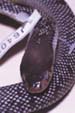 Pseudechis butleri Smith (1982) 35-45 Type data holotype WAM R22345 from 19 KM SE of Yalgoo, WA
 Cannia centralis Wells and Wellington (1985) 1-61. Type data holotype AM R60317 from 8 km north of Tenant Creek, NT.
 Of these formally described variants, only "australis" as the King Brown or Mulga Snake and "butleri" as the Butler’s Snake have been generally accepted as distinct species by most Australian herpetologists.
Due to the high biodiversity of the Australian herpetofauna and the relatively small number of herpetologists in this country, taxonomy of species at the subspecies level has been largely ignored.
However this author expects higher recognition of reptiles at this level in Australia in future years. Perhaps the trend is being led by the likes of Dr. Glen M. Shea, who by way of example described two new subspecies in 2000, namely, Tiliqua gigas evanescens Shea 2000 and Tiliqua scincoides chimaerea Shea 2000 to identify regional variants of well-known and familiar species.
Based on examination of numerous living and dead specimens in Australian collections and museums, this author has formed the view that butleri is a distinct species from australis, while the same may be true for some of the above described variants.
The type specimen of "australis" has been examined on behalf of this author and is typical for the species as known. It has numerous paired and divided subcaudals. "darwinensis" is regarded as a junior synonym to "australis".
"cupreus" is regarded as also being of the same species as "australis". While it has been impossible to examine the type specimen, "australis" from NSW have been examined and appear not to be substantially different from specimens in Queensland and in turn the Northern Territory, or at least not enough to warrant being treated as a different species. The differences between NSW and NT Cannia australis appear to be clinal, rather than being two well-defined and disjunct gene pools, a position corroborated by the various published distribution maps based on Museum collections (e.g. Longmore 1986).
The snakes known generally as " denisoniodes" from south-west Western Australia are different from "australis" found elsewhere in Australia and should be accorded at least subspecific status.
They attain a far smaller adult size than northern "australis" and differ in other characteristics (see Wells and Wellington (1987) and/or Smith (1982) for details).
"brunnea" are the distinctive Eyre Peninsula form of the Mulga Snake and while similar in build to northern "australis" are noted for the fact that the scales have a distinct dark/light contrast between the anterior and posterior of each scale, giving the snake a two-toned colour appearance.
While this is seen in Cannia australis from elsewhere, it is not as pronounced as in this form.
Furthermore it appears that the variation from north to south and east to west in these snakes may be clinal and that is why many authors refuse to recognise them as separate species (e.g. refer to the photo at the top of page 184 in Greer 1997 for a similar patterning in a Western Australian Cannia australis to a lesser degree).
Wells and Wellington not only recognised " brunnea" as a species in its own right but went further and described a centralian "australis" as a new "species", namely "centralis".
Further investigations are needed to determine whether or not "centralis" is a clinal variant of either "australis" and/or "brunnea", (which is as generally indicated by the findings of Smith (1982) and this ongoing study.
Whatever is finally determined in this regard, it is reasonable to note here, that all conform to the typical stout "australis" form and not the more gracile Pailsus. Refer also to the data for the type specimen of "centralis" as provided in the list of museum specimens examined near the end of the paper.
Shea and others (personal communications) have stated that they only recognise subspecies or species when there is no evidence of a cline between regions.
This author concurs with that view, save for circumstances whereby the zone of clinal variation between populations is relatively small.
And yes, as already inferred, the ultimate determination of whether or not the above named forms are distinct species or subspecies will require a substantial amount of field work in the relevant regions to ascertain whether or not clines are involved and/or any forms are sympatric in regions of potential overlap.
Smith’s description of "butleri" as a distinct species has been accepted without question by most herpetologists and is agreed by this author. It too is of the stout "Pseudechis" form and not the more gracile Pailsus appearance.
Subcaudal and other variation in Cannia australis examined
Examination of Cannia australis in the Queensland Museum from Queensland revealed a general pattern of Cannia australis having ten or more divided subcaudals (usually over 15).
Exceptional specimens from the Longreach area and to the south of here (Nareena, 48 km South of Longreach) had between 5 and 10 divided subcaudals and one specimen, J45761 from Nareena, had just the last 3 out of 61 subcaudals divided.
However it was later suggested that these specimens may have been faded and misidentified Collett’s snakes (Panacedechis colletti).
Regardless of the proper identities of the snakes from the Longreach area, it remains true that for Queensland at least, it appears that the trait of all single subcaudals, can alone be used by field workers to separate Pailsus pailsei from Cannia australis with a reasonable degree of confidence.
However during this author’s examination of "australis" specimens in other museums and private collections it became clear that there were specimens of this species with all or most subcaudals single. In all other respects these snakes were the typical heavy bodied Cannia australis and not Pailsus spp., and so there was no difficulty in assigning them to Cannia australis, even before resorting to counting either subcaudals and/or ventrals (australis having the lower counts), although in all cases we checked subcaudals at least in order to positively identify the snakes to species level.
These specimens usually, but not always, also had the lower average single subcaudal counts that separate Cannia australis from Pailsus spp.
These specimens tended to come from the Northern Territory and spanned a host of different regions within the state and adjoining areas.
Examples included:
Qld Museum specimen number J47008 from the Simpson Desert in the NT, which had all single subcaudals, except for the last three and was 1.5 metres (approx.)
Qld Museum specimen numbers J54594 and J54583, both from Gomarren Stn 100km SE of Cunnamulla Qld, which both had just five single subcaudals
Australian Museum R51945 from Alice Springs NT, which had just 3 of its 53 subcaudals single.
Australian Museum specimen number R139849 from Barkly Highway, NT which had 56 subcaudals (all single), missing the end of the tail.
Australian Museum specimen number R10232 from Groote Eylandt, NT which had 66 subcaudals, just the last of which was paired (see subspecies description below).
A number of live specimens from various parts of the NT were examined that also fitted this general profile - details of one of which is reported later in this paper.
However in these same general regions were Cannia australis that were identical in appearance, but had high numbers of divided subcaudals.
For example:
Australian Museum specimen number R26248 from Mount Olga, NT which had 13 divided subcaudals.
 Australian Museum specimen number R60317 (the type specimen of "Cannia centralis"), from 8 km north of Tennant Creek, NT, which had 49 single subcaudals (no. 46 divided), then 18 divided subcaudals.
Australian Museum specimen number R60318 from Barrow Creek, NT, which had many single and many divided subcaudals
Australian Museum specimen number R32639 from Port Essington, NT which had 31 single and 31 divided subcaudals.
Typical examples from outside the NT, included:
Australian Museum specimen number R60315 from Bourke, NSW which had numerous divided subcaudals.
Australian Museum specimen number R82560 from Weipa, Far North Queensland which had 30 single and 27 divided subcaudals.
Excluding the Groote Eylandt and Bathurst Island specimens, there was little if anything to separate the snakes with mainly single subcaudals from those with mainly divided ones, and hence the treatment here of all NT and north-west Western Australian "australis" inspected by myself as being of the same species.
Neil Sonneman observed a similar pattern in WA "australis" in the Western Australian Museum. However his inspection was rushed and he may have inadvertently looked at some Pailsus weigeli at the same time, a point he readily concedes. Also refer to Hoser (2000a) re an alleged Pailsus from Wyndham, WA.
Sonneman also drew this author’s attention to unusual specimens at the West Australian Museum from Koolan, Cockatoo and other Islands in north-west Western Australia, and adjacent mainland areas, stating that further investigation was warranted and provided evidence of dwarfism in some of these island populations.
Koolan Island Cannia australis are described as a new subspecies below.
Groote Eylandt Cannia australis were first brought to this author’s attention when in 1998, immediately following the description of Pailsus pailsei, Victorian herpetologist Rob Valentic reported that he had seen a road-killed specimen of this species on Groote Eylandt in late 1998 and identified it as such by the all single subcaudals.
Save for a small piece published to this effect in Monitor 10 (2/3) (Hoser 1999b), nothing further came to light until the author was able to examine relevant specimens from this locality at the Australian Museum.
These specimens, while evidently of the species Cannia australis, exhibit a number of characteristics different from other Cannia australis and therefore warrant being identified as a different taxa (see description below).
Characteristics as seen include a tendency in scalation (subcaudals and rostral) towards that of Pailsus pailsei. The reasons for this can only be guessed, but will be discussed shortly.
A similar situation was also seen in C. australis from Bathurst Island, herein described as another separate taxa.
As already inferred, it is also likely that specimens from other Islands in northern Australia may warrant recognition at the subspecies level.
CANNIA AUSTRALIS BURGESSI SUBSP. NOV.
 Holotype:
Australian Museum Specimen number R135292 from Gemco Mining Lease Area, Groote Eylandt, NT. Lat 14.00 S 136.40 E.
Collected on 18 September 1991. Male.
 Scalation: smooth, 210 ventrals, 68 subcaudals, all single except for numbers 64 and 67 which are paired. 126 cm Snout-vent, 151 cm total length (over five feet), 17 Mid body rows (mbr), divided anal. Other details can be gleaned from photos of this animal and/or inspection of the type.
Colour: Generally brownish dorsally, with a creamish white belly. Refer to photos or the type specimen itself, some of which are reproduced with this description.
Paratypes:

 Australian Museum Specimen number R77369 - from Angurugu Mission, Groote Eylandt, NT. Lat 14.00 S 136.40 E.
Scalation: smooth, 67 Subcaudals - last three paired, rest are single (64). 208 ventrals, 17 mid body rows, divided anal. 105 cm S-V, 127 cm total length. Other details can be gleaned from a photo of this animal and/or inspection of the paratype.
Colour: Generally brownish dorsally, with a creamish white belly. Refer to photos or the type specimen itself.
Australian Museum Specimen number R25776 - from Groote Eylandt, NT. Lat 14.00 S 136.40 E.
Scalation: smooth, 36 Subcaudals - (missing end of tail). 213 Ventrals, 17 mid body rows, divided anal. 100 cm S-V, 111 cm total length (note missing end of tail). This snake has a mangled head and a metal tag. It also has distinctive black markings on the head or neck. Other details can be gleaned from photo of this animal and/or inspection of the paratype.
Colour: Generally brownish dorsally, with a creamish white belly. Refer to photos or the type specimen itself.
Australian Museum Specimen number R73954 - from Groote Eylandt, NT. Lat 14.00 S 136.40 E.
Scalation: smooth, 65 all single subcaudals, excluding number 63 which is paired. 197 ventrals, 17 mid body rows, divided anal, No visible hemipenes. Other details can be gleaned from a photo of this animal and/or inspection of the paratype.
Colour: Generally brownish dorsally, with a creamish white belly. Refer to photos or the type specimen itself.
Australian Museum Specimen number R10232 - from Groote Eylandt, NT. Lat 14.00 S 136.40 E.
Scalation: smooth, 65 single subcaudals followed by a single divided one. Total length of 140 cm, snout vent length Refer to the photo of this specimen depicted on this page, and/or the type specimen itself for further details.
of 116 cm. Relatively unusual among the same of this subspecies to have a "U"-shaped rostral. 17 mid body rows, divided anal. No visible hemipenes. Other details can be gleaned from a photo of this animal and/or inspection of the paratype.
Colour: Generally brownish dorsally, with a creamish white belly. Refer to photos or the type specimen itself.
Australian Museum Specimen number R14798 - from Groote Eylandt, NT. Lat 14.00 S 136.40 E.
This is a poorly preserved specimen missing the end of it’s tail. It has no visible hemipenes.
It measures about 150 cm in length. Similar in most respects to the other paratypes.
Other details can be gleaned from a photo of this animal and/or inspection of the paratype.
Colour: Generally brownish dorsally, with a creamish white belly. Refer to photos or the type specimen itself.
Diagnosis
Similar in most respects to Cannia australis from which it can be identified by the following suite of characters. An average lower count of divided subcaudals and a wider rather than horseshoe shaped rostral scale, although this latter trait is not universal as seen from the series of paratypes. This subspecies is also believed to be restricted to Groote Eylandt.
These snakes are separated from Pailsus (all forms) by their larger adult size and more stout build, as typified in the type specimen.
There are also differences in the head scalation, including the fact that the preocular in Cannia australis burgessi tends to of a more triangular shape (in an up/down direction) than seen in Pailsus. Also refer to head photos and/or a comparative inspection of types.
Like other Cannia australis, this taxa is separated from Pailsus by the lower average ventral count (refer to Wells and Wellington 1987, inadvertently corroborated by Hoser 1998b).
Most other scalation and morphological traits tend to fit within the ranges of both Pailsus and Cannia.
Like other Cannia australis, this subspecies is an elapid that is usually an even brownish colour dorsally and a creamish white ventrally. Occasionally there are dark markings between or on the edges of the scales.
Cannia australis newmani sp. nov. from Bathurst Island, is separated from Cannia australis burgessi and most other Cannia australis by its much broader parietal scales.
For further details, refer to the type specimen and/or view photos of it.
Biology
Cannia australis burgessi is believed to be a generalized predator feeding on a variety of vertebrates and as a preference is diurnal, though crepuscular or nocturnal in hot weather.
Otherwise this taxa is little known.
A specimen was kept by a reptile keeper in suburban Melbourne in late 1998 (not Valentic) and died within a few months in captivity. The cause of death was not determined and no autopsy was carried out.
The keeper was otherwise experienced with reptiles and generally had no problems maintaining his collection.
It is assumed that this taxa has similar ecology to other Cannia australis.
There are no known conservation threats and the taxa is believed to be common where it occurs.
Etymology
Named after UK Herpetologist Tom Burgess, publisher of the Reptilian Magazine as a tribute to his ongoing commitments to both the hobby of keeping reptiles in the UK and elsewhere and the scientific study of reptiles.
CANNIA AUSTRALIS NEWMANI SUBSP. NOV.
Holotype

 Australian Museum Specimen number R14374 - from Bathurst Island, NT. Lat 11.77 S Long 130.23 E
Scalation, smooth: 57 Single subcaudals then 2 divided (last two), (59 subcaudals total), 204 Ventrals, no hemipenes visible, 17 Mid Body rows, Anal divided, 71 cm Snout Vent, tail length is 14 cm, total length is 85 cm.
Colour: Generally brownish dorsally, with a creamish white belly. Refer to photos or the type specimen itself shown on the next page.
Diagnosis
Cannia australis newmani sp. nov. is separated from Cannia australis burgessi, other Cannia australis (excluding Cannia australis aplini) and Pailsus species by its much broader parietal scales. The line separating each supraocular and frontal is more strongly curved in this subspecies than in Cannia australis, Cannia australis burgessi or Cannia australis aplini, (as described below).
Refer to the type specimen and/or view photos of Cannia newmani for further details.
Like other Cannia australis, this taxa is also separated from Pailsus by the lower average ventral count (refer to Wells and Wellington (1987)).
Like other Cannia australis, this subspecies is a elapid that is usually an even brownish colour dorsally and a creamish white ventrally. Occasionally there are dark markings between or on the edges of the scales, particularly near the head and neck.
This subspecies is currently known only from Bathurst Island, but almost certainly occurs on the immediately adjacent Melville Island, both in the Northern Territory.
Neither the Qld or Australian Museum had specimens from the latter location.
Biology
It is believed to be a generalized predator feeding on a variety of vertebrates and as a preference is diurnal, though crepuscular or nocturnal in hot weather.
Etymology
Named after UK Herpetologist Chris Newman, an editor of the Reptilian Magazine and Ophidia Review as a tribute to his ongoing commitments to both the hobby of keeping reptiles in the UK and elsewhere and the scientific study of reptiles. This is particularly pertinent, as at the current time (2001) there is a strong push by several special interest groups to outlaw the hobby of keeping reptiles in the UK.
CANNIA AUSTRALIS APLINI SUBSP. NOV.
Holotype

 Western Australian Museum Specimen number R82994 - from Koolan Island, WA, Lat. 123.47 E Long. 16.08 S.
A well-preserved subadult to adult specimen with 53 single subcaudals (anteriorly) followed by 15 divided ones.
Dorsal colour is generally brown, with a reddish sheen, although the anterior of each scale is lighter than the posterior. Ventrally the snake is a creamish white in colour.
On the head is dark pigment along the scale boundaries, giving each scale an etched appearance.
Paratype
Western Australian Museum Specimen number R103729 - from Koolan Island, WA, Lat. 123.47 E, Long. 16.08 S.
A well-preserved immature specimen which possesses numerous divided subcaudals.
This snake is essentially an even brown all over (dorsally) with a slight reddish tinge, and creamish ventrally.
Refer to the photo of this specimen, printed below on this page, or the paratype specimen itself for further details.
Diagnosis
Cannia australis aplini is similar in most respects to the type subspecies. It is separated from the type subspecies (as indicated by the holotype, BMNH 1946.1.20.39, (deemed here as a typical example) from Port Essington, N.T.), through it’s usually lower divided subcaudal count and generally smaller adult size.
Cannia australis aplini (including the type specimens listed above) does in common with most typical Cannia australis australis have a horseshoe shaped rostral, which serves to separate the species from Pailsus (v-shaped rostral).
In contrast to the type specimen of Pailsus weigeli, (a species likely to be confused with this subspecies) Cannia australis aplini tends to have distinctively broader parietals, and a generally more thick-set build, particularly around the head and neck.
The latter trait on it’s own is usually more than enough to separate the two species (for any person with experience with these taxa).
Other scalation traits for Cannia australis aplini, including ventral, subcaudal and mid body scale rows, and variation within the head shields, fit within the published ranges for the nominate subspecies as described by Smith (1982) and others.
Cannia australis aplini is currently known only from Koolan Island, Western Australia, but may in due course be found to be the subspecies that inhabits other islands in the Bonaparte Archipelago and adjacent mainland areas of the Kimberly district, WA.
It is separated from the subspecies of Cannia australis described above by the traits outlined in those descriptions.
Cannia australis aplini is separated from Cannia australis newmani and Cannia australis burgessi by distribution (all being mutually exclusive).
Cannia australis burgessi is further separated from all other known subspecies including aplini by it’s generally more v-shaped rostral.
The line separating each supraocular and frontal is generally more strongly curved in Cannia australis newmani than in typical Cannia australis australis, Cannia australis burgessi or Cannia australis aplini.
Based on the holdings at the Western Australian Museum, this subspecies (Cannia australis aplini) appears to be relatively unusual in that there is a high degree of variability in colour and subcaudal counts within a single population.
Biology
Basically unknown, but presumably similar to the type subspecies, australis from northern Australia. As for all Cannia australis, this form is believed to be diurnal by choice, but crepuscular and nocturnal in very warm weather.
Etymology
Named after Ken Aplin, a curator at the Western Australian Museum. While this author has not agreed with all the taxonomic views expressed by Aplin (e.g. Aplin and Donnelan (1999) versus Hoser (1998a)), Aplin’s contribution to herpetology, at all levels should be appropriately recognized. This author is certain that the same view is shared by many "private" herpetologists in Western Australia, who have always found Aplin and other herpetologists at the same institution, ready, willing and able to lend a hand to any worthwhile research endeavor.
An updated assessment of the relationships between species in the genera Pailsus and Cannia
Smith (1982) p. 44 suggested that Cannia australis may have expanded their range in relatively recent geological times, at the expense of other "Pseudechis", including colletti and guttatus, which as a result tend to have relatively restricted distributions.
Wells and Wellington (1987) in effect said much the same thing, when they asserted:
‘We believe that the discovery of Cannia weigeli indicates an archetypic remnant of the original basal stock that may have given rise to the genera Cannia and Pseudonaja. Cannia weigeli may well be pivotal in the enunciation of one of the major proteroglyph speciation events in the post Gondwana Australasian region.’
While it is true that in many respects Pailsus appears intermediate between Pseudonaja and Cannia, this author’s view is that Pailsus split from Cannia group well after "Pseudechis"/Cannia and Pseudonaja diverged.
However as Pailsus is clearly of the more "standard" elapid form, it would be reasonable to assume that the archaic stock was more in line with Pailsus than Cannia.
And in line with Smith’s conclusion in relation to Cannia australis usurping other "Pseudechis" in recent geological times, it appears that the same reasoning could be applied to Pailsus, which appears to have declined at the expense of Cannia, the result being a relatively patchy and disjunct distribution in Australia.
On the other hand, in southern New Guinea, where it appears that Cannia australis has failed to appear and/or Panacedechis papuanus is sufficiently differentiated from Pailsus, these snakes remain relatively common and prominent where they occur.
This author understands that Panacedechis papuanus has been found on Sabai Island in Torres Strait, while no Pailsus are known from this area. On that basis (and further based on the crude assumption that Pailsus do not occur in the Torres Strait area) it may be reasonable to infer that even Panacedechis papuanus (thought to be the more widely distributed) is a more recent entrant to the New Guinea fauna and that it’s relatively greater distribution there has been to an extent at the expense of Pailsus.
This is even though both remain locally abundant in the Merauke area of Irian Jaya.
A credible and contrary view may be that both Panacedechis papuanus and Pailsus entered New Guinea at about the same time and that Panacedechis papuanus has simply been more successful there, with the populations on the islands to the immediate south merely being part of a more recent migration towards Australia.
Furthermore while it is hard to speculate as to the evolutionary advantages/disadvantages or roles of character manifestations, including single versus paired subcaudals in elapids such as Pailsus and Cannia, it is reasonable to assume that the manifestation of these traits (one way or other) coincides with other adaptations that enable the snakes to survive better in their environments.
Kluge (1974) noted "character displacement" in Lialis jicari from Southern New Guinea as compared to northern specimens (sometimes known as Lialis cuneirostris).
It appears that the same phenomena may have occurred in Cannia australis in northern Australia. Thus in regions known to have Pailsus spp. it appears that Cannia australis are more likely to have lower ventral counts and higher counts of divided subcaudals (e.g. Queensland). In areas where only one form is known to occur (e.g. Groote Eylandt), the Cannia australis tend towards more intermediate characteristics, in that subcaudal counts are up and there is a far stronger tendency towards all single subcaudals and/or even the rostral may tend towards being V-shaped rather than horseshoe shaped.
It’s assumed that these observed traits are indicators of other as yet unobserved character manifestations.
Assuming the "character displacement" phenomena to be real in Cannia australis in relation to Pailsus spp. it becomes reasonable to infer that where this is detected (Cannia australis tending towards Pailsus traits) the likelihood of Pailsus occurring in the same areas is in fact reduced. On that basis it would appear that if Pailsus do in fact occur in the Northern Territory (presumed highly likely), their distribution would at best be very patchy.
However the areas most worth looking at would be places such as Port Essington, where Cannia australis with high divided subcaudal counts are known.
Furthermore, of note is that while Pailsus are so far known in Australia only from very rocky locations, the reverse seems to be the case in Irian Jaya. The Merauke area is essentially without rocks.

 This may further indicate that Pailsus have in fact been displaced from these non-rocky habitats in Australia by the apparently more effective and competing Cannia australis, with Pailsus only holding out in a few relictual habitats.
Mengden, et. al. 1986 presented a series of morphological, electrophoretic, karyotypic, ecological and behavioral data in order to make an assessment of the genus "Pseudechis".
They in turn concluded that this was a monophyletic group.
Wells and Wellington (1987) revisited this assessment and using the same data, they concluded to the contrary, that their own earlier division of the genus "Pseudechis" was correct. They had split the group into Pseudechis (being porphyriacus only), Cannia (including australis and butleri) and Panacedechis (including colletti, guttatus and papuanus).
As already mentioned at the start of this paper, this author concurs with this division.
Furthermore, the fact that Pailsus has apparently held out far better against Panacedechis in Southern New Guinea than it appears to have against Cannia in northern Australia could be taken as further evidence to support the division of "Pseudechis" into these other genera.
Based on initial and comparative observations between Cannia and Pailsus in Australia, versus Panacedechis and Pailsus in New Guinea, it would be fair to assume that had Cannia made it into the Merauke area of New Guinea, then Pailsus would likely have been exterminated from there.
Notwithstanding this assessment, it may be that Pailsus is in relative decline in New Guinea as demonstrated by their relatively restricted range when compared to Panacedichis papaunas.
It’s understood that "Pseudechis" (comprising Pseudechis, Cannia and Panacedechis) are being genetically tested at the moment (2001) by Ulrich Kuch and others with a view to reassessing the relationships between the known species. Following the original Pailsus description in 1998 this author provided Kuch with a slough of the skin to aid his tests.
While his data is welcome, it is likely that herpetologists will dispute the taxonomy of these genera for some time regardless of what data he produces.
This is in part due to differing interpretations of the same facts.
Furthermore this ongoing dispute will no doubt be fuelled in part from an inertia by some people to use correctly assigned "Wells and Wellington names" in the likely event that their stated position is supported by the data.
Also refer to the warning on DNA testing, venom tests and other matters later in this paper.
The Genus Pailsus
This author’s definition of Pailsus is based on a raft of reasons and characteristics known in the snakes. However they initially hinged in the main on the physical morphological characteristics of the snakes as compared to their closest relatives (thought to be Cannia).
This being the smaller size and much more gracile build. Behaviorally the snakes are also considerably more aggressive (as a rule) and do not settle down in captivity in the same manner as most Cannia.
Because medium to large elapid snakes in Australia are usually physically conservative in terms of scalation, size, shape and colour it is not at all surprising that Pailsus are similar in many respects, not just to Cannia, but also Oxyuranus and Pseudonaja (the dominant genera of large elapids here in Australia).
In fact in terms of build and temperament, Pailsus is more like the latter two genera than the former, and all other "Pseudechis" as defined by Mengden, et. al. 1986.
Even Wells and Wellington (1987) suggested that Pailsus (then called "Cannia weigeli") was somehow an intermediate form between the genera Pseudonaja and Cannia. In which case this was itself an argument for placing either Pailsus in a genus on its own or merging the three.
As the latter alternative was untenable, the only other logical one was the former. On this basis, this author believes that the three species currently identified under the generic name Pailsus, should remain placed within this genus unless and until compelling evidence to the contrary appears.
Furthermore, if one accepts the conclusions of Smith (1982) and Wells and Wellington (1987) to the effect that Cannia australis is of relatively recent stock and that it has displaced earlier forms, and then combine this assertion (based on distributional evidence) with the relationships within "Pseudechis" as published by Shea, Shine and Covacevich (1993) p. 308, in turn derived from Mengden et. al. (1986), one sees that Cannia butleri is presumed to be potentially more archaic than the more widespread Cannia australis. Even if the reverse is true, (australis the more archaic form) it all points to the common ancestor being a large and stocky snake as per the genus Cannia as now known. Pailsus (all three forms) do not fit this prototype, indicating at best, divergence a long way back in geological time and therefore should for the time being remain placed within a separate genus.
Furthermore, the wide and apparently disjunct distribution of Pailsus (Qld, WA, Irian Jaya), effectively precludes any suggestion that the Pailsus form is recently derived.
One should also note that the apparent absence of Cannia australis from southern New Guinea and/or wide areas of the region, also suggest that the evolution of this species (Cannia australis) has been recent, bearing in mind recent (in geological terms) rises in sea level preventing migration across the Torres Strait, and further noting that other northern Australian forms such as Lialis burtonis and Chlamydosaurus kingi had already been able to get across to southern New Guinea / Irian Jaya.
The present distribution of Pailsus rossignollii (confined to southern Irian Jaya / southern New Guinea) also indicates that it’s basal stock came from the Australian side, particularly when reconciled with the known distribution of cogeners Pailsus pailsei and Pailsus weigeli.
Suggested pointers for other people to investigate
Australians and others with an interest in Pailsus/Cannia are advised in the first instance to inspect at least some known specimens of Pailsus pailsei and/or Cannia weigeli.
With specimens now held at Australia’s major museums, including at Sydney, Brisbane, Perth and Melbourne, this is not any longer a difficult task for most seriously interested persons. Particularly so, as the relevant curators have had these specimens pointed out to them and can presumably access them without too much difficulty.
As a second option, persons are directed to read and re-read the relevant descriptions by this author and study the various published photos, including those with this paper and those of the live Pailsus pailsei, depicted on the cover of Monitor 10 (1) (Hoser, 1998b).
In many respects, it is actually easier to examine the photos than the specimens themselves.
Ted Johansen (of Browns Plains, Brisbane, Queensland), stated that he had found a road-killed snake some years back near Yeppoon in Queensland that he thought fitted the profile of Pailsus pailsei.
Ted Johansen said that he recalled it having all single subcaudal scales. In spite of this claim, (and further noting that Johansen is generally credible) this author thinks it unlikely that any Pailsus will emerge from that region and at this stage can offer no decent explanation in relation to Johansen’s account.
The Queensland Museum has a relatively good coverage of specimens from within Queensland and based on this author’s inspections of them, believes that no more Pailsus are likely to be found in that state, save for the far north-west, which is from where they are known already.
New South Wales and South Australia are not believed to be likely places for Pailsus and this has been confirmed via the author’s looking at numbers of live and preserved snakes from both states.
Although this author has inspected a sample from the Northern Territory and to a lesser extent Western Australia, these are the two states deemed most likely to have more Pailsus (as in where these species are likely to have wider ranges). Also refer to comments in Hoser (2000a).
The State Museums in each state are both likely to have further specimens of Pailsus, and although it is this author’s intention to scrutinize both collections, this may be some years away, due to other competing tasks.
And based on results so far (as outlined above), it is also unlikely that either institution will actually have a great number of Pailsus specimens - in spite of their sizeable holdings of "Cannia australis".
Notwithstanding this, herpetologists in the field are also most likely to make discoveries of specimens in the tropical regions of these two states, particularly in hilly areas and perhaps on some offshore islands.
Should a person find a "King Brown Snake" of more gracile build than usual, a high subcaudal count (215 or over), all or mainly single subcaudals and a distinctive v-shaped rostral scale, then they may well have a Pailsus.
If possible, these specimens should be legally collected and/or lodged in the nearest institution of note.
This author welcomes any verifiable information in this regard.
Besides a single and aged, live specimen of Pailsus pailsei in Victoria, there are still no known captives in Australia. That’s notwithstanding a number of rumors heard by this author since 1998.
It is important that specimens be brought into captivity, bred and studied. This is true for both Pailsus pailsei and Pailsus weigeli and any other related taxa that may yet await discovery.
Furthermore, based on a number of obvious misidentifications of Cannia australis with all or most subcaudals single, thought in the first instance to be Pailsus, that have come to the attention of this author, it can be expected that similar misidentifications will happen again.
On that basis this author issues a very strong warning to researchers looking at other properties in these snakes, including venom properties, DNA and the like, which do not by necessity involve a sighting of the source specimens by the individuals doing the study.
The risk of a misidentified snake being used and thereby confusing the final results is potentially large and therefore preventative steps should be taken.
In this author’s view, this should include (preferably) sighting the specimen and counting the scales (ventrals, subcaudals (single and paired), size and shape of the rostral and parietals), in order to positively identify the specific status of the animal in question, and/or have this information available so that if and when doubts are raised later on, they can be effectively resolved.
By way of example, this author has facilitated venom and DNA tests on Pailsus, based on the sole known living specimen, held by herpetologist Roy Pails, a specimen for which all relevant data is known.
In the case of New Guinea Pailsus the above pre-empted problems are less likely, because it seems that there are no Cannia australis on the island. Thus identification of the source snake is less likely to be in error.
Fortunately there appears to be a reasonable interest in Pailsus rossignollii in the USA and Europe and more should become known about these snakes as hobbyists breed them and publish their data.
Fortunately these snakes are still being exported from Indonesia by the local dealers there.
Locally in Irian Jaya, feral animals such as Cane Toads (Bufo marinus) and other species may cause a long-term threat to the species due to the areas they are known to occur in.
Island forms
Three Island forms of Cannia australis have been described as new taxa in this paper. This author expects further distinct variants to be found in various islands to the north of Australia, if and when further investigations are carried out.
It is common knowledge that islands are an excellent catalyst for a strong genetic push towards speciation. This is because of the small and isolated gene pools captured in these areas, with little if any inflow from outside combined with the often very different habitat and predator/prey circumstances of such habitats when compared to adjoining "mainland" habitats.
In southern Australia a number of island forms of Tiger Snake (Notechis) have been formally described at either subspecies or full species level. Trends towards giantism or dwarfism, dictated by available food sources has been documented in the literature (including Hoser (1989)).
Based on inspection of limited samples of Cannia and Acanthophis from islands along Australia’s northern coastline and elsewhere, it appears a similar speciation push is happening and has probably been going on for the period since sea levels rose to current levels (since the last Ice Age), when many areas now islands were joined to the mainland.
In the case of Cannia, populations this author deems in need of further study include those on the many Islands of the Bonaparte Archipelago in north-west Western Australia and Mornington Island in the Gulf of Carpentaria (Lat. 139.30 E, Long 16.30 S), any of which may have either Cannia or Pailsus.
Based on Longmore 1986, there are no records for Cannia australis from any Torres Strait Islands and checks should be made of any possible populations on these islands, as well as other islands in the general area between New Guinea and Australia.
It is noted that "normal" Cannia australis are known from the mainland areas in adjoining Cape York Peninsula.
For Pailsus rossignollii, and/or potential Cannia australis, it is important to ascertain the exact distribution of these species in New Guinea.
Obviously with the high level of political instability in the Irian Jaya / PNG border region, this is not an easy task.
However the area most in need of survey work (meaning most likely to yield positive results) is probably the coastal region between Moibut, PNG (Lat 9.10 S, Long 141.55 E) and Merauke, Irian Jaya, (Lat. 8.28 S, Long.140.2 E).
Some comments on deliberate misinformation, lies and serious scientific fraud perpetrated by Messers David Williams and Wolfgang Wüster
Preamble
A scientific paper is not normally the place to "attack" another person and/or launch a defence of one’s own good name. However the circumstances surrounding the activities of David Williams and Wolfgang Wüster in the period 1998-2001 are hardly ordinary and thus have to be addressed (refer to the Wüster, Williams and other relevant citations at the rear of this paper).
The two men have "spammed" thousands of e-mails and internet posts falsely accusing this author of innumerable crimes, various unethical and improper acts and other general misdeeds.
By virtue of the sheer number of posts, their wide dissemination through use of the new technology and the "venom" in some of these posts, it is appropriate that some of the more serious lies and outlandish claims made, be formally corrected for the public record.
Wüster and Williams have attempted to mask some, but not all of their posts as "scientific comment", but even a cursory assessment of their statements (some of which are cited at the end of this paper) which are replete with lies, half-truth’s, distortions and blatant double standards, reveal that their agenda has absolutely no scientific component whatsoever and is instead one purely of attack on this author’s character and integrity.
In 1993 this author published Smuggled: The Underground Trade in Australia’s Wildlife which detailed warts and all the Australian wildlife trade, both legal and illegal.
In that book this author detailed some of the smuggling activity by Queensland snakie David Williams, who in February 1992 pled guilty and was convicted of the relevant smuggling charges in a Queensland court.
In the sequel Smuggled-2 this author detailed more of Williams’ activities; this time his failed Austoxin venture in New Guinea which turned out to be nothing more than a front for smuggling snakes from New Guinea to the northern hemisphere.
This author chose not to detail other criminal activities by Williams on the basis of relevance.
Williams didn’t sue, presumably because all that was published about him had long been on the public record (including having been reported in the tabloid daily papers) and was true and correct.
However because he was adversely named in two "Hoser books" Williams has since then made innumerable cowardly attacks on this author and his credibility at every opportunity.
This has included on various internet forums, where more recently he has been joined by his small band of followers including the likes of Wolfgang Wüster et. al..
And for the record, in this country (Australia), the credibility of Williams as a herpetologist (or much else) is very little.
Wüster, an academic based in a British university, similarly has little, if any documented expertise in Australian reptiles. And based on his writings, Wüster’s alleged qualifications can only be called into serious question.
In early 2001, when the above-mentioned "debate" turned against Williams and Wüster, principally when the Williams scientific fraud was exposed (see below) he cut off access to his list server for those who were posting against him. When the same thing happened on John Fowler’s much larger Australian Herps list and Kingsnake.com forums Williams threatened to sue the list managers if they allowed the posts to remain, so they were wiped.
When Victorian herpetologist Neil Davie pointed out fraudulent and/or unethical practices by Williams and Wüster on the Kingsnake forums, Williams petitioned list owner Jeff Barringer to have Davie’s access cut off and it was.
Other’s who similarly pointed out fatal flaws in arguments by Williams and Wüster were similarly vilified and attacked by the pair, including Bernard Frome, Pete Brammell, Paul Hackett, Benjamin Dowse, and Scott Eipper (a small number of their posts are cited at the end of this paper) and others.
Wüster, an erstwhile ally of Williams also posted lies and misinformation about this author on various lists, with a spamming ability that most mass-marketers would only envy, and yes, now some of the same lies have since even been published in "hard copy" in the generally resepcted journal Litteratura Serpentium in June 2001.
This mass posting activity didn’t help Williams and his case completely as other correspondents, including Bernard Frome and Pete Brammell had also got onto the case and then independently exposed Williams and Wüster for all they had. Williams then made threats and had all posts pointing out his misdeeds wiped from the various servers.
We sought legal advice in relation to suing Williams for defamation way back in 1999 in relation to another unrelated character assassination by him of this author on the internet. We were advised against suing him on the basis that he had a bad credit history (debts totaling tens of thousands of dollars) and we would be unlikely to recover any financial damages from him in the event that we won.
Bearing in mind the fact that this author and his publishing company, Kotabi successfully got court issued damages awards against two other persons, namely Neil Mayger (For $7,000) and Adam Anthony Zoccolii (for $24,000), the latter in a defamation action, and we were then unable to recover our money because they both declared bankruptcy, we were not keen to go down this path again.
And hence Williams and his cohorts continue to peddle lies and other defamatory statements against this author, safe in the knowledge that we have effectively no legal redress.
Effectively the same Wüster piece published in Litteratura Serpentium in June 2001 was first published on Kingsnake.com in January the same year (on January 22, 2001 at 11:29:07 to be exact), and then widely circulated elsewhere. It was rapidly discredited by numerous correspondents (e.g. Frome (2001a, 2001b), Brammell (2001a, 2001b, 2001c, 2001d)).
Notwithstanding this, Wüster then "shopped" the piece among friends and people who owed him favors in order to get some other "names" as "co-authors" to give his wild claims added credibility, before it was re-sent to the editor of Litteratura Serpentium on 5 May 2001 (four months later) (see van Aken 2001a, 2001b).
This editor (Gijs van Aken), fell for the ruse, and so Wüster’s already discredited lies got a second running.
This author sent the editor of Litteratura Serpentium a response systematically rebutting all Wüster’s lies and allegations and of the same length as Wüster’s original piece.
But the editor, who had in fact invited this author’s response, went back on his word and e-mailed this author and said he wasn’t going to print the response.
That response has since been posted at:
http://www.smuggled.com/LitSer1.htm
The first attacks on Hoser’s name
Besides a constant string of e-mails to the various lists claiming that Hoser’s various books are fiction - at least in terms of himself, Williams began his attacks on Hoser’s credit in other ways in late 1998.
And yes for the record, all the criminal activity by Williams as detailed in the Smuggled books is 100% true and correct and Williams knows it.
Should anyone have any doubts, a check of the magistrates courts will reveal all.
In order to attack this author’s credibility, Williams decided to run a campaign to stop any herpetologists from using Hoser assigned scientific names.
The first point of attack was the description of Pailsus pailsei.
Williams made a number of posts stating that the species was not valid and that it was nothing more than an underfed King Brown Snake.
Subsequently he posted an "online paper" at:
http://www.uq.edu.au/~ddbfry/index.html
in November 1988 and numerous other places so as to ensure that it was picked up by all the major internet search engines.
Using a series of rubbery figures and a comparison of the subcaudal counts between Pailsus and Panacedechis, (which has about as much relevance as comparing apples with sausages), Williams ended his paper by declaring Pailsus pailsei as being synonymous to Cannia australis.
Williams promised to publish more in a "peer reviewed journal" by end of 1998, but three years later, no such publication has appeared.
The online paper, co-authored by Brian Starkey is now known as Williams and Starkey version 1.
Williams was evidently unaware that the code of the ICZN does not allow for the "devalidating" of scientific names quite so easily and that once a name has been assigned to a valid taxa it is effectively there for ever, provided that the taxa has not already been named.
Notwithstanding this, Williams then posted on numerous internet lists the same idea, for the following two years.
His erstwhile friend and colleague Wolfgang Wüster got onto the same caper and posted far and wide the same idea.
Between them, they sent thousands of e-mails and posts and using text-book bullying tactics they aggressively attacked all those who defended this author’s taxonomy or his good name.
Wüster’s posts were even more curious as up until at least early 2001, he had (by his later admission) never seen a Pailsus and yet had been prostituting himself as a taxonomic genius with regards to these animals and spamming everyone accordingly.
By way of example, as late as July 2001, you could find Wüster’s comments denying the existence of Pailsus on the internet at Peter Uetz’s site at:
http://zeta.embl-heidelberg.de:8000/srs5bin/cgi-bin/wgetz?-e+[REPTILIA-species:’Pailsus_SP_pailsei’
It is quoted below:
"Species:
Pailsus pailsei
Synonyms:
Pailsus pailsei HOSER 1998
Subspecies:
Family:
Serpentes: Elapidae snakes
Distribution:
Australia (N-Queensland)
Comment:
Questionable genus and species. Probably synonymous to Pseudechis australis (W. Wüster,
pers. comm.) "
Now reading this first in 1999 and again in 2001, you’d be led to believe that Wüster in fact had expertise on these snakes and so was somehow qualified to voice an expert opinion.
But in early 2001 after the Williams/Wüster fraud (see below) became all too obvious, he attempted to distance himself from David Williams when he told the australianherps@egroups.com list:
" I am not personally familiar with these animals (New Guinea Pailsus), and I have quite openly stated this myself".
Now this comment is even more curious as Wüster has since written in Litteratura Serpentium, that this author had rushed to print with his Pailsus descriptions.
As recently as 23 January 2001, (after the publication of both Pailsus descriptions) David Williams posted on Kingsnake.com the following condescending comment to Scott Eipper:
"I hate to burst your bubble son, but there is absolutely no conclusive evidence whatsoever to ‘prove’ that these snakes (Pailsus) are anything other than local variants of Pseudechis australis."
That the Williams and Wüster lines about Pailsus pailsei and Pailsus rossignollii being nothing more than unusual Cannia australis was having "success" and/or gained some "legitimacy" was easily demonstrated by the currency their arguments gained among ill-informed herpetologists and novices.
Typical of this outcome was seen on two websites managed by Patrick Hughett, (Hughett 2001a, 2001b) both of which in due course made it clear that he had read the Hoser papers, and then that Wüster, Williams and Mark O’Shea all regarded Pailsus rossignollii as being merely "Pseudechis australis".
A series of 27 posts by Hughett on Kingsnake.com (Hughett 2001c) , intersperced by a series of misinformation posts by Williams and Wüster in June and July 2001 also put a date on the creation of the website and showed that the Williams/Wüster claims about Pailsus rossignollii being nothing more than "Pseudechis australis" actually continued well beyond the time that the Wüster et. al piece had been submitted for publication in the journal Litteratura Serpentium, and even after it had been published.
The reversal
Now the problem with Williams and Wüster wasn’t the fact that they were arguing tripe. This author could handle that. The problem was that their position was about as fixed as Melbourne’s weather.
In other words it liked to "chop and change".
Now anyone can see from the dates above that well after BOTH Pailsus descriptions were published by this author, both Williams and Wüster were still maintaining the lie that they were the same thing as Cannia australis.
Now bearing in mind neither men had seen Pailsus, they were brave to be venturing such a strong and "expert" opinion, but in this democratic world, this author was effectively unable to stop them.
And perhaps here it is also worth mentioning that as far back as 1999, this author realised that arguing with the likes of Williams and Wüster was a waste of time and so for the main part, this author has taken leave from online forums and not responded to the tirade of attacks from the two men.
However, here in Victoria, where most prominent hobbyists have been to Pails’ residence and actually seen Pailsus in the flesh, nobody disputed the fact that they were different from Cannia australis, and so it was from this state (Victoria) that the strongest defence of this author came from.
And it also appears that many individuals who defended this author’s good name against the attacks by Williams and Wüster did so, not necessarily out of faith in this author’s work or friendship with the author, but rather because they had axes to grind against Williams over failed snake-trading deals and the like.
The matters are unrelated to this author, and a summary of some of these nefarious and failed deals, criminal activity and the like by Williams and associates was posted by Eipper on Kingsnake.com in three separate posts in July 2001 (Eipper 2001a-c).
The details are far too extensive to post or even summarize here in this paper.
Notwithstanding all the above, by mid 1999 the Williams/Wüster claims against the validity of Pailsus (at the species level at least) looked more and more dodgy as more and more people looked into the two men’s pseudoscience.
This became even more so after the publications of Hoser (1999a, 1999b), Sutherland (1999) and the emergence of the Wells and Wellington description of "Cannia weigeli", all of which tended to indelibly confirm the original Pailsus description as describing a hitherto unrecognized taxa.
Following publication of the Pailsus rossignollii description in late 2000, a number of correspondents from outside Australia weighed into the debate and also took on Williams and Wüster and their dodgy claims that Pailsus was nothing more than an underfed Cannia australis.
It was by this stage obvious that the Williams/Wüster claims lacked merit and their arguments accordingly went down the drain.
It was then that the pair then engaged in what was perhaps their biggest stunt yet.
Both started to claim that this author had somehow stolen their information and "naming rights" for the species Pailsus rossignollii.
The claim was curious based on the fact that they’d been denying it was different for the previous two years.
The pseudoscience as practiced by the pair then broadened into a more comprehensive attack on this author’s credibility.
It ran (and still runs) essentially along the following lines,
A/ When the pair think Hoser has properly named a valid taxa, to falsely accuse Hoser of stealing naming rights or the science from someone else, and
B/ When they disagree with Hoser’s taxonomy or nomenclature, to thereby ridicule and/or rubbish Hoser’s "science" or methods, preferably by simultaneously attacking Hoser’s credibility, and
C/ To improperly create as much "confusion" as possible (in violation of the ICZN’s code), thereby improperly discouraging others from using "Hoser" names, even when they are clearly the correct names.
In other words this author is to be damned no matter what he does.
The big Scientific Fraud by Williams that was supported by Wüster
The fraud was first identified by Geelong-based herpetologist Neil Davie, who posted the details on Kingsnake.com.
Fortunately this was one of the few occasions that David Williams was not aggressively posting messages from his home computer and a sizeable number of herpetologists archived the relevant documents before Williams could wipe them from the internet, a few hours later.
Other herpetologists, including Richard Wells also agree that what occurred was a serious case of scientific fraud.
Here’s what happened!
For the benefit of readers, the original version of the online paper by Williams and Starkey, published in late 1998 is now generally known as "Version 1".
It was posted at: http://www.uq.edu.au/~ddbfry/index.html
The same view as published in that paper was widely endorsed by Wüster and O’Shea who both claimed to be working with Williams.
(In fact as recently as 30 June 2001 at: 17:09:41:, O’Shea is on the record in a post on Kingsnake.com as claiming Pailsus rossignollii "are still classified as "King Browns"), see any of Hughett (2001a-c)).
Now bearing in mind that this Williams and Starkey online paper and similar comments had been posted far and wide by these people, there was absolutely no secret in the "fact" that these people thought that Pailsus was nothing more than an underfed and undersized "Pseudechis australis".
Now on that basis one would have to be a psychic to realise that this was a "front" so that the same group could go ahead and prepare a description of a New Guinea Pailsus without Hoser’s or anyone else’s knowledge, further bearing in mind that it was common knowledge that this author was looking at New Guinea Pailsus.
The scientific fraud really started in early 2001 when Williams and Wüster got onto the internet and started to claim that Hoser had somehow stolen their naming rights to this species (P. rossignollii).
This followed by Williams reposting his paper on the internet at another site, namely:
http://www.Kingsnake.com/toxinology/snakes/taxonomy.html
However this time there were a few noticeable alterations and hence this paper has since become known as "Version 2".
One alteration was the address for Brian Starkey. That part was benign.
The date at the bottom had also been removed.
That act on it’s own, one could suppose was also benign.
But what wasn’t quite so benign was a citation tacked into the "paper" and cited in full at the end.
It read as follows:
"O’SHEA MT, WILLIAMS DJ, WÜSTER W, BIGILALE IH, and STARKEY BA (1998) A new species of highly venomous elapid snake of the genus Pseudechis from southern coastal Papua New Guinea - taxonomy, conservation status and medical implications. Unpublished (in preparation)."
The key element here was to add credibility to the new assertion Hoser had deliberately sought to steal naming rights to the species.
However this new addition didn’t quite push Williams, Wüster, et. al. over the line.
You see the ICZN’s code of ethics (which Wüster et. al. are also falsely claiming this author has violated) gives a 12 month limitation on the so-called "hands off" period.
This is so as to stop people "claiming" species and then effectively monopolizing all work on them for years on end while they think about publishing a description.
Even with this fraudulent addition, Williams, Wüster, et. al. failed to place this author outside of the ICZN’s code of ethics.
Once Williams’ attention was drawn to this shortcoming in his "paper" out came what’s now become known as "Version 3".
This appeared on Kingsnake.com following requests by various correspondents and was posted by Williams at:
http://www.Kingsnake.com/forum/venom/messages/31762.html
This one had an added in text citation ‘O’Shea et. al. (1999)’, thus effectively placing Hoser inside the 12 months "hands off" period.
The problem this time was that Williams forgot to do the same to the citation at the end of the paper, which still had the 1998 date.
Williams in his haste had also neglected to remove all the earlier versions of his paper that he’d smattered all over the internet on different servers (including the two url’s named above).
As already noted, that had been to take advantage of the benefits of so-called "search engines" to ensure maximum exposure for his "paper".
When Davie posted details of the frauds and the various websites through the various herpetological list servers, people everywhere downloaded their own copies in anticipation of Williams wiping them from the world wide web.
This Williams did a few hours later.
The three versions of the perennially morphing paper were then posted on Kingsnake.com by Pete Brammell and yes, have since been archived all over the place.
And furthermore, Wüster came in and actively supported the Williams fraud with a whole raft of lame excuses.
In a post to Kingsnake.com dated February 03, 2001 at 04:19:28: Wüster stated that the scientific fraud perpetrated by Williams had occurred but then went on to say that it wasn’t "relevant" to their arguments.
He then went on to threaten to sue anyone who dared repost the earlier versions of the fraudulently altered paper claiming "copyright" over the material.
But Wüster was right about one very important thing.
It was his side that had the copyright on committing scientific fraud!
And yes, in spite of repeated requests from numerous other concerned correspondents, Wüster refused to divorce himself from the Williams/Starkey fraud.
Now in fairness to Mr. Starkey, David Williams’ business partner in "Black Knight Reptiles", who incidentally and recently pled guilty to illegally smuggling a Black-headed Python (Aspidites melanocephalus) through the post and was fined by a magistrate’s court, this author has no evidence to show that he was a part of the Williams fraud, even though his name appeared as the junior author to the paper in it’s ever morphing versions.
And while this author may have differences of opinions on some matters with Richard Wells (the man who co-described "Cannia weigeli"), we are at one in being of the view that the alteration of the Williams/Starkey paper is one of the most blatant cases of scientific fraud ever perpetrated (Wells pers. comm. dated 4 Feb 2001).
The Williams fraud coupled with the attacks against this author got even worse when it became clear that Williams was posting on the various internet forums under a series of different names. The IP address (as found by viewing each e-mail’s "document source") gave Williams and his antics away. During this period, Wüster even let it be known in another post that he hadn’t even seen any New Guinea Pailsus and knew nothing of them.
Thus the assertion that this author was somehow poaching a species name from Williams, Wüster and others was well and truly buried.
Most of the relevant posts, including the three versions of the Williams/Starkey "paper" can be found on one of this author’s websites.
Namely:
http://www.lexicon.net/adder/Slandl.htm,
http://www.smuggled.com/Slandl.htm
and mirrors.
The Wüster and Williams’ lie excposed for once and for all!
And perhaps we should actually enlighten people as to what Wüster had to say after the whole Williams/Wüster fraud was exposed via the Kingsnake.com forums.
It was Neil Davie of Geelong (whom both Wüster and David Williams falsely claimed was this author posting under a bogus name) who finally got Wüster to retract the lie that this author had somehow stolen "naming rights" to Pailsus rossignollii.
Wüster’s post on January 28, 2001 at 03:59:11: read thus:
"Hi Neil,
Thought you’d gone?
: Did Hoser really steal naming rights for Pailsus rossignollii from
: Williams as Williams has recently claimed?
No, and Williams did not claim so…"
Oops!
David Williams had earlier claimed Hoser had stolen his research.
But that in itself would have been some mean feat.
You see this author sits based in Melbourne (Australia), while Williams, somewhat itinerant, tends to hover somewhere in the general vicinity of Cairns, Queensland, a distance of over 3000 kms.
Now bearing in mind he’s been at loggerheads with this author and this author has never seen anything written by him of herpetological note, save for a couple of minor (and in this instance irrelevant) papers, this author would have no idea as to how he was supposed to have got into his filing system and stolen key data on anything!
Further lies and misinformation by Wüster and Williams
In his piece of fiction published in Litteratura Serpentium, Wüster accused this author of publishing in non-peer-reviewed publications so as to avoid scrutiny of his taxonomy.
The argument is a furphy because, put simply, if this author’s taxonomy is wrong, it simply won’t be used - period!
And that is the case wherever the paper is published - peer reviewed or otherwise.
And by way of example, that’s why the name Varanus teriae Sprackland 1991 is not being used anymore.
(Refer to ICZN case 3043 (Sprackland et. al. 1997) and later relevant comments and findings as published in the Bulletin of Zoological Nomenclature for further details).
And the above is in no way an attack on Sprackland as a herpetologist.
The above comments by Wüster are also a case of serious double standards by Wüster himself.
Wüster’s own piece was deliberately sent to Litteratura Serpentium, where he was able to exercise significant pull with the editor and avoid any external scrutiny of his own litany of lies.
In light of the events following the publication of Wüster’s piece in Litteratura Serpentium it is also clear that Wüster is keen to forcibly and unethically censor this author from having any proper right of reply, and/or even the liberty of correcting some very obvious lies.
Furthermore none of the thousands of posts by himself or his erstwhile colleague David John Williams attacking this author has ever been submitted for peer review.
Cited at the rear of this paper are just a few dozen of them.
Space reasons prevent us from listing them all.
Oh and yes, three years later we still wait for the peer reviewed paper by Wüster’s buddy, Williams as promised by Williams (to be published by end 1988!).
Sinister motives fabricated by Wüster
Wüster wrote that this author had requested the editor of Litteratura Serpentium (Gijs van Aken) speed up publication of the Pailsus rossignolli description. Wüster then went on to imply some kind of sinister motive.
He knew he was lying.
But the full story can be confirmed by van Aken’s own e-mails.
Another editor (Marcel van der Voort) received the paper in early 2000 and said that it would be published in the August 2000 issue. This was promised!
Typically this author receives the journal here in Australia in the first week of the month after publication date and so by week two of September this author put a notification of the description on the smuggled.com website as he has done for other publications.
After that, this author received the journal and the description was not in it.
This author was also advised by a mutual friend of the author and Brian Starkey that David Williams had seen the notification and intended "publishing" his own "description" of the species and then back-dating it to claim priority.
Based on Williams’ past form, this author accepted that the story was credible and then contacted the other editor of Litteratura Serpentium (van Aken) and asked what was going on with the paper in terms of publication.
This author was told that the paper was not due to be published for a while. Van Aken was then told of the concerns re Williams and asked that the paper be published as soon as possible.
Aken contacted the other editor, confirmed the original undertaking to publish in August and that it had been inadvertently broken and then published the paper in the December issue.
It’s understood that the Williams plot failed after he was advised that "publication" on the internet does not constitute a valid description as per the ICZN’s code and because of his inability to find or lodge a "type" specimen in a Museum.
Ditto for the rest!
Wüster also ran his internet campaign of misinformation in relation to the other Hoser descriptions, such as for the Acanthophis descriptions, by posting via a number of Uetz’s internet sites (including: http://srs.embl-heidelberg.de:8000/srs5bin/cgi-bin/wgetz?-e+[REPTILIA-Species:’Acanthophis_SP_crotalusei’], http://srs.embl-heidelberg.de:8000/srs5bin/cgi-bin/wgetz?-e+[REPTILIA-Species:’Acanthophis_SP_barnetti’], etc, that the species named by Hoser in Hoser (1998a) were not valid.
By early 2001, and after a number of the names had come into general usage, in particular Acanthophis wellsei Hoser 1998, Wüster also reversed his tune and falsely alleged that Hoser had somehow deliberately "stolen" naming rights from elsewhere.
Now this author wants to make it entirely clear that it is always a possibility that himself and/or anyone else may inadvertently "jump the gun" on someone else by naming one or more species that another person was also intending to describe.
This almost happened in the case of three pythons from Halmahera, Ambon and the Tanimbar group that the author had named (refer to Hoser (2000b)), and then withdrew from publication at the last minute after he became aware that David Barker, et. al. were also intending to assign names to the taxa (as stated in Hoser (2000b)).
That this author was able to withdraw the three names assigned by himself was a fortuitous event and had there not been a "chance encounter" between himself and David Barker at a herpetological conference in Sydney in October 1999, three species of snakes now widely known as Australiasis clastolepis, Australiasis nauta and Australiasis tracyae by Harvey et. al (Barker being a co-author) would probably have been instead known as Australiasis valentici, Australiasis haydnmcphiei and Australiasis greeri.
And yes, the history of herpetology is littered with cases of one herpetologist inadvertently or even intentionally naming taxa that another person had been in the process of formally describing.
However based on the proven conduct by Wüster, Williams, et. al. such a claim by these men as recently asserted in Litteratura Serpentium in June 2001 in relation to this author clearly cannot be credible.
And based on the misinformation put out by these men, the idea that this author has somehow jumped the gun on any research project by themselves, either deliberately or even unintentionally is a pure fiction.
By way of example, besides the long-awaited and unfulfilled promise by Williams made on 1 November 1998 (Williams 1998), that he’d publish a piece repudiating Pailsus pailsei as a species in a "peer reviewed" journal by year’s end; nearly a year after publication of the Pailsus rossignollii description in December 2000, Williams et. al. have failed to produce a shred of evidence to suggest that they were working on either this or any other similar species and that’s in spite of repeated requests by numerous independent herpetologists for the men to do so.
It seems even more odd, bearing in mind that the pair have rushed to print literally thousands of times to peddle their false assertions about this author and the species described ("against" and later "for" their existence as valid taxa), but they have continually refused to produce any data or evidence to suggest that they were working on any relevant taxa.
Noting that the said species had been already been formally described and the ICZN’s rule of priority, there would have been nothing gained by the pair to with-hold any data or evidence that they had, and so by this late stage, one could only conclude that the pair lacked such data and had been lying about this since mid January 2001.
This date is when they reversed their assertions about Pailsus pailsei and Pailsus rossignollii not being valid species.
By virtue of the time now effluxed (well over six months), it could be fair to assume that should any relevant data be published at some far-flung date by Wüster, Williams or immediate associates, then it had been gathered well after publication of both Pailsus descriptions and purely as a result of this author’s initial bringing these hitherto undescribed taxa to the attention of science.
This is particularly so, noting that more recently in June and July of this year (2001), and after grudgingly conceding that Pailsus are in fact different from Cannia australis, Wüster and Williams have been actively touting for data and material in relation to Pailsus spp, via Kingsnake.com, private e-mails and elsewhere (refer to Hughett, 2001c, Williams 2001k and Wuster 2001s, 2001t, 2001y)
More of Wüster’s lies, misinformation and inconsistent statements
Wüster et. al. claimed in Litteratura Serpentium that this author has a "deep-seated antagonistic feelings towards the scientific establishment, perhaps as part of the general anti-institutional attitudes Hoser displays in his writings".
It seems hard to reconcile this assertion with the fact that in every taxonomic paper this author has had to rely on the assistance’s of the " scientific establishment" and has acknowledged them in every case, including at the end of this paper.
Or perhaps using Wüster’s own warped sense of reality, anyone who dares voice a different view to anyone else’s views could be described as "anti" and if the person they disagree with are with an institution they could then be labelled "anti-institutional".
On that basis we could include almost every herpetologist in Australia.
To back his assertion that this author is "anti-institution" he cited a paper, namely (Hoser 2000c).
But seriously, if Wüster wanted to claim that this author’s paper, "What’s in a species name" (Hoser 2000c) is an attack on the staff at the Australian Museum (as he asserted), then perhaps he should think again.
For those who haven’t read the article, it’s main thrust is complaining about a new practice at the Australian Museum whereby some curators are selling "naming rights" on species at $5,000 a pop with the money to be put towards further research.
This author didn’t complain about the Museum’s intentions or ethics, and made that much perfectly clear, but rather that if the system became widespread and entrenched it could lead to a whole host of unforseen problems and abuses as listed in the article.
And guess what?
Privately at least the herpetology curators at that very same museum, namely Sadlier and Greer said they agreed with this author!
Based on Wüster et. al’s perverse logic you could argue that these two are "anti" themselves!
Wüster’s widening the attack on Hoser
In Literatura Serpentium, Wüster et. al. made numerous false and defamatory allegations in relation to this author’s other taxonomic papers, including Hoser (1998a, 1998b, 1999a, 2000a, 2000b).
Most of the claims were ridiculous in the extreme.
And yes they ran along the lines already outlined above.
Wüster made the bogus claim that this author had an uncritical acceptance of Wells and Wellington taxonomy, including in Hoser (2000c): the python taxonomy paper.
The statement is a barefaced lie.
By way of example, in Hoser (2000c) this author made it point blank clear that he didn’t recognise Aspidites collaris as cited by Wells and Wellington.
And this author has previously published other obvious differences of opinion in terms of the potential status of the names "Cannia weigeli" and "Acanthophis armstrongi" (see Hoser (1998a) for the latter and this paper for the former).
However it appears that Wells and Wellington are sufficiently mature enough to accept that taxonomists may agree to disagree or have reasoned scientific discussion rather than engage in a major process of vilification.
Or based on Wüster et. al’s perverse logic maybe this author is "anti" Wells and Wellington as well?
Wüster also alleged that Hoser’s python descriptions described what he called "non-taxa" as part of his bid to undermine usage of the names assigned.
The claim seems odd based,
1/ On his own lack of experience with the said taxa and
2/ Based on the fact that these hitherto unnamed taxa had been already recognized by numerous herpetologists including Hal Cogger.
By way of example, the South-west Woma was recognized as distinct as far back as 1983 by Cogger et. al. who singled it out for conservation measures in their action plan.
This author’s naming of this form as Aspidites ramsayi panoptes merely formalized the process.
That’s the harsh reality.
Wüster then published a comparison between this author’s python descriptions and new species diagnoses and those of Harvey et. al., claiming that because this author’s had a lower word count (per taxa described), they were somehow inferior.
But in rebuttal of Wüster’s flawed argument, and by way of example, Laurie Smith’s "diagnosis" for Morelia carinata (which he called Python carinatus) has not been called into question even though it consisted just one short sentence.
If Wüster et. al. sought to claim brevity as a criticism of this author’s species descriptions, then there are numerous well-known names in herpetology who stand out in front.
The public claims by Wüster in Litteratura Serpentium seem even more odd, bearing in mind that this author has received (by forwarding) a number of private e-mails from Wüster acknowledging that in every scrutinized case, the Hoser descriptions fit within the rules of the ICZN and describe valid taxa.
Ethics and the ICZN code
It has been seriously violated by Wüster et. al.
The code states:
"5. Intemperate language should not be used in any discussion or writing which involves zoological nomenclature, and all debates should be conducted in a courteous and friendly manner."
Based on the innumerable posts on the internet and other materials peddled by Williams and Wüster et. al., the code has been seriously breached in a manner perhaps never seen before.
One of many examples was Wüster’s post on Kingsnake.com at: January 23, 2001 at 15:25:33.
Or try the posts by Williams on Kingsnake.com at: January 23, 2001 at 07:09:37, January 24, 2001 at 02:53:06 reposted widely by Williams, or Wed, 24 Jan 2001 20:03:19 +1000 on his own ozherps@egroups.com list server which perhaps represents one of the greatest violations of the ICZN’s code of ethics ever to appear in print.
The latter of these commenced thus:
"Y’know on second thoughts this list is all too quiet, so I think I’ll just
comment on a couple of things in Raymond’s post:…"
before he got into yet another of his baseless character assassinations of this author.
When the likes of Neil Davie and others came to this author’s defence, Williams true to his form cut off their access to the lists.
But is hasn’t just been this author who has been the victim of the lies and deception as carried out by Wüster and Williams. Hiding behind the relative anonymity of their personal computers, Williams and Wüster have driven countless keen herpetologists away from the hobby, and/or at least away from the various discussion forums on the internet.
Persons lied about and vilified by the pair have included such prominent and competent herpetologists as Neil Davie, Scott Eipper, Benjamin Dowse, Tim Mensforth, Roly Burrell, John Fowler, Mick Pugh and others.
All this has been against the rules of the ICZN and ordinary ethics in general, but it seems that the only part of the ICZN code Williams and Wüster have been concerned with adhering to, is the recommendation for "wide dissemination"!
The Loch Ness Monster
This author doesn’t believe in it.
However, maybe David Williams does.
After Wüster’s post in January 2001 stating that Hoser hadn’t stolen naming rights to Pailsus rossignollii, Williams put out a series of messages stating that he was working on another species of "Pseudechis" from New Guinea.
Now if Hoser was genuinely into stealing naming rights on species, the Williams post was probably quite stupid.
But the reality is that Williams is probably just lying again.
You see detailed inquiries by this author, including in Papua New Guinea, had already failed to reveal any "new" "Pseudechis".
And/or based on the fraudulently altered Williams and Starkey (1998/9/01) versions 2 and 3, they are now outside the ICZN’s one year hands off period anyway!
In other words this so-called new species allegedly being described is perhaps just a variant of the Loch Ness Monster!
The end game for Wüster and Williams
As already mentioned, the real issue here is quite simple. Wüster and Williams have commenced a long-term campaign to bully and bludgeon people not to use "Hoser names" for validly named taxa, for fear that their "enemy" may gain some added and perceived credibility.
They have lost the three-year battle over Pailsus, which at the species level at least are now generally recognised as distinct from Cannia australis - and that’s in spite of the best efforts by the pair to stop this from happening.
So instead they will peddle the lie that this author has somehow stolen their naming rights.
The same lie has now been peddled by the pair in relation to Acanthophis wellsei Hoser 1998, since Aplin and others have also accepted the name as valid (also see Aplin and Donnellan, 1999).
And yes, expect to see more of the same for any other taxa this author describes that over time become generally known under those names.
And for the record, if either of the pair expect their lies and misinformation to somehow dissuade this author from naming new taxa when appropriate, they should have a serious rethink.
And on a related matter, the pair should realise that no matter how often they repeat a lie, it will always be just that … a lie.
Another lie this author fought for quite a few years was that "there is no corruption in the Victoria Police."
After this author’s books Victoria Police Corruption 1 and 2, were published in 1999, the chief commissioner (repeatedly adversely named in the book) unexpectedly quit two years ahead of the end of his contract and several hundred other police also retired before their time.
And yes, the Victoria Police Corruption books showed that things were so bad in this state that the government finally ditched the old lie and got a new commissioner from New South Wales.
And everybody knows how clean the police were in that state!
An electronic posting
Perhaps encapsulating the seriousness of the fraudulent activities by Williams and Wüster, in particular the fraudulent alteration of Williams and Starkey (1999) versions 1, 2 and 3 was an electronic message from Jim Paull in Gippsland, Victoria posted on the Kingsnake.com academic forum.
The post came well after the pair had been exposed by Neil Davie, Pete Brammell and others. The following message is reproduced below in full so as to avoid charges here of misquoting:
‘http://www.Kingsnake.com/forum/acad/messages/274.html
Papers sought online
[ Follow Ups ] [ Post Followup ] [ The Academic Forum ] [ FAQ ]
Posted by Jim Paull on February 01, 2001 at 21:24:36:
I agree with Pete Brammell and the others in relation to Hoser and his posting of his papers online.
A group of us here in Gippsland, Vic. were after copies of Williams and Starkey papers Marks 1, 2, and 3, preferably online, as well as the various posts to the Kingsnake forums over the last week or two.
We found them an instructive study of how a respected scientist such as Hoser could be attacked and smeared by use of various quotes, misquotes and in the case of the 3 papers, plain fabrications, by his adversary/s.
The reason we found the matter of interest was because it was a rare and very public and open example of how sometimes so-called scientists can stoop as low as anyone else to foreword their own agendas, that sometimes are very unscientific.
(particularly when the protagonists are still alive - as we usually only hear about these things, long after their deaths)
Could someone here at Kingsnake, Hoser, or someone else who may have archived the various posts, including those no longer on the Venomous forum at Kingsnake put them all on a website somewhere permanently for us to refer to in future?’
A look into the future of what Wüster claims are "non-taxa"
The pattern of behaviour by Wüster is now well established.
Based on precedent it can be said that any descriptions by this author will usually and in the first instance be condemned and described by Wüster as describing "non-taxa", which is a term Wüster seems to like to use.
Ditto for Williams.
As and when the names move into general usage, and in spite of the best efforts by the pair to stop this happening, we can expect further false and baseless claims by the pair to the effect that this author has either stolen naming rights and/or research from elsewhere … probably themselves.
In terms of what this author can do to stop this - the answer is probably very little.
This author has little if any control over the internet and the ability of the pair to "spam" messages to thousands of recipients.
However, this author does issue a serious caution to editors of printed journals and other similar publications against publishing the various diatribes of lies, half-truths and misinformation as written by Wüster and Williams as happened in the case of the piece seen in Litteratura Serpentium (Wüster et. al. 2001).
In that example, the editor of the journal failed to make even so much as a cursory check of the allegations, further noting that such a check would have readily revealed Wüster et. al.’s statements as grossly inaccurate.
As a final irony, it’s worth noting that had either of Wüster or Williams diverted just a fraction of their immense time and effort in their campaign against this author to looking at and describing some of the many presently undescribed reptile taxa in the Austro-papuan region, they could have easily done competent investigations and descriptions of several, perhaps including some of the presently undescribed "high-profile" species.
This includes such taxa as varanids and skinks known to inhabit the region to Australia’s immediate north.
If the pair had taken this path instead, they could perhaps have effectively pre-empted yet more baseless claims by themselves against this author and/or anyone else they have taken a maniac dislike to for allegedly "stealing" naming rights to newly described taxa.
End note
Unconnected to herpetology, this author was invited to give a keynote address to a corruption conference on Saturday 24 March 2001 at the northern NSW town of Inverell. On the Friday preceding this conference, the author phoned the reptile curator at the Queensland Museum, Jeanette Covacevich and asked for access to the museums archives of "Cannia australis" specimens.
For her, the call was effectively out of the blue.
She asked when? And the author replied "next Monday would be nice".
Upon arrival at the Museum, Covacevich, then nursing a broken wrist and fellow curator Patrick Couper asked "How long do you expect to be here?", the reply being "As long as it takes".
A one-day stay translated to be three.
The author hadn’t spoken to either for the best part of a decade, but that made no difference, the welcome mat was always there.
Now this wasn’t just a one off situation. While visiting the museum, the same welcome mat was laid open for HSQI member Will McGrath and others.
We weren’t so much as colleagues, but almost like family (and that’s in spite of a number of disagreements over matters of taxonomy, wildlife laws and the like).
(No this author couldn’t get them to re-label their Water Pythons "fuscus" instead of "mackloti"!).
The following week it was a similar story at the Australian Museum, where Ross Sadlier and Allen Greer were only too glad to offer any assistance’s they could.
Being an ex-Sydney-sider, this author has seen more of these men over the years, but again that probably didn’t matter.
You see the curators at the Australian Museum have always bent over backwards to help other researchers - and that ranges from the high-profile academic in an institution to the ten-year old boy who has just got his first pet Bluetongue (Tiliqua).
You see we were all herpetologists/people with an interest in reptiles and we all sought to work together as best we could.
Curators in most other Australian (and for that matter overseas) state Museums have a similar track record to those in NSW and Queensland.
The following week, this author’s house was the "Melbourne Hilton" for some Sydney-based reptile enthusiasts that the author had never met, who’d merely invited themselves into the house on the basis of their common interest in reptiles.
In the week after, a novice keeper in Geelong gave this author unfettered access to his collection to allow the author to inspect and photograph an aberrant Cannia australis, and several pythons in his collection.
For the record, that snake, identified by the hobbyist "as possibly a "Pailsus" from Hayes Creek in the NT", was identified by this author as a standard (but immature) Cannia australis, based on it’s having 53 subcaudals, all single, excl. no.s 47, 52 and 53, 187 ventrals (approximately) and a horseshoe shaped rostral typical of Cannia australis.
And yes, since the original publication of the Pailsus descriptions, this author has been inundated with information from people seeking to further the common goal of herpetology, all of whom never sought anything in return.
Going back in time, this author recalls how a couple of decades back he went out and caught some Centralian Bluetongues (Tiliqua multifasciata) and gave them to an unkempt, acne ridden youth for free. The youth who at the time had no experience in the reptiles, merely said he wanted a few as pets and to study them. He was then an unknown face in the crowd, attending a few meetings of the Australian Herpetological Society (AHS) in Sydney.
These days that formerly unkempt, acne ridden youth is nowadays better known as Dr. Glenn Shea.
Who knows? Maybe if he never got a start in herpetology when he did, he may have become a lawyer instead?
Thankfully most of the time in herpetology the spirit of cooperation overrides any artificial barriers erected by "spoilers" that separate "amateur","professional" or whatever other pigeonhole is erected.
This is just as well, as there are far too few of us working on far too many different reptiles.
And yes, in spite of constant debate on a whole host of matters, (which in itself must involve a level of dialogue, dispute and civilized argument, particularly as available information changes), most herpetologists can conduct themselves with decency, decorum and in an overriding spirit of cooperation.
It is this author’s contention that the practice of lies, frauds, deception and vilification as practiced by the likes of Wüster and Williams, particularly through their excessive spamming of internet "lists" such as "Kingsnake.com" and "australianherps" are not welcome elements in Australian herpetology, and the quicker that either these two men and/or their perverse and warped attitudes are banished from herpetology, the better.
Acknowledgements
Numerous herpetologists have assisted this author in relation to the Pailsus/Cannia project and related matters over the period 1998-2001. Many are named at the end of the earlier Pailsus papers and are not necessarily named here.
In relation to the more recent works, specific thanks must go to the curators and related staff at the various museums who (as usual) gave this author and/or others working with him unfettered access to the collections in their custody. These include Jeanette Covacevich and Patrick Couper of the Queensland Museum and Ross Sadlier and Allen Greer, all of whom granted access to their collections at extremely short notice for as long as sought.
Laurie Smith and Ken Aplin provided similar access to the West Australian Museum collection to fellow Victorian herpetologist Neil Sonneman.
Further assistance’s were provided by Will McGrath, Paul Woolf, Robert Balgarnie, Ray Platt and others, all of whom assisted this author in various ways during a 2001 trip to Queensland and NSW.
Herpetologist and museum volunteer Ted Johansen spent some days assisting the author in his examination of specimens including numerous tedious scale counts at the Queensland Museum. Neil Sonneman made available his notes and photos from the West Australian Museum.
While not being acknowledged in person, some of the written and/or published works by some of the authors listed below, should be acknowledged on the basis of the information they provided as a guide to where to look for further information in this project. Included here are the papers by Wells and Wellington from 1983, 1985 and 1987 (and sources therein), that of Smith 1982 and the summary material provided by Greer 1997 (and sources therein), Mengden, et. al. 1986 and Shea et. al. 1993.
The innumerable phone conversations with countless herpetologists and "reptile freaks" who freely shared their information and data and in many cases access to specimens are also acknowledged.
Finally, this author’s wife, Shireen Hoser, has through her unfailing support, made it possible for this and other projects to proceed.
Museum material examined by this author and brief notes
Code:
Information is separated by a dash "-", specimens are separated by commas.
M = Male, F = Female, NHV = No hemipenes Visible, all lengths are total length unless otherwise specified, A = Adult (over 120 cm), S = Immature/Sub-adult (50-120 cm), J = Juvenile (under 50 cm), TSC = Subcaudals, SSC = Single subcaudals, DSC = Divided subcaudals, X/X = Subcaudal count with the first number being the single ones, X = uncounted, +10 = more than ten, V = Ventrals, HO = Head only, Unless listed as "HO" and where there is no indication of subcaudal count, it is to be taken as more than ten.
Collection/locality data for given specimens below can be readily matched up on the table files as presented by the relevant museums and posted on the internet via links from this paper from one week after the "hard copy" version is published (Sydney and Brisbane museums only).
Click here to download the relevant files.
WA Museum collection localities are given with the data below.
Qld Museum ("J" prefixes excluded):
Cannia australis: 839 - A - HO, 2181 - A - NHV, 5024 - S - NHV, 5887 - A - NHV, 6234 - A - NHV, 6294 - A - NHV, 6888 - NHV, 8501 - A - NHV, 10448 - A - NHV, 10518 - A - HO, 10572 - A - HO, 11047 - A - HO, 11204 - A - HO, 11444 - A - HO, 11457 - A - HO, 11473, 11483 - A - HO, 13667 - A - HO, 13723 - A - HO, 13724 - A - HO, 13725 - A - HO, 13726 - A - HO, 13727 - A - HO, 13728 - A - HO, 13729 - A - HO, 13730 - A - HO, 13731 - A - HO, 13732 - A - HO, 13733 - A - HO, 13734 - A - HO, 13735 - A - HO, 13736 - A - HO, 13737 - A - HO, 13739 - A - HO, 14256 - A - HO, 14285 - A - HO, 14364 - A - NHV, 14377 - A - HO, 15294 - A - HO, 15868 - A - NHV, 17832 - S - 29/28 - NHV, 20203 - A - HO, 20658 - A - HO, 21331 - A - NHV, 21335 - A - NHV, 21480 - A 23/scale numbers 24-28 divided, no. 29 single, no.s 30-31 paired, no.s 32-41 single then no.s 42-63 paired - NHV, 21790 - A - HO, 21793 - A - M, 22301 - A - NHV, 22391 - A - NHV, 23673 - A - NHV, 23761 - A - HO, 24019 - A - NHV, 24562 - A - M, 25437 - A - NHV, 27762 - A - HO, 28419 - A - HO, 29746 - A - M, 30281 - A - HO, 30304 - A - M, 30310 - A - HO, 30311 - A - M, 30312 - A - HO, 30313 - S - NHV, 31994 - A - NHV, 33145 - A - No tail, 33567 - A - M, 34780 - missing most of tail - M, 35358 - A - M, 37153 - S - NHV, 37154 - J - NHV, 37211 - A - NHV, 37212 - S - NHV, 37215 - A - NHV, 37326 - A - NHV, 37588 - A - HO, 38720 - A - No tail, 38721 - A - HO, 38722 - A - HO, 39088 - S - NHV, 39473 - S - HO, 40049 - S - NHV, 40068 - A - HO, 40070 - A - HO, 40071 - A - HO, 40971 - A - HO, 41479 - 2500cm - missing end of tail after 40th single subcaudal - NHV, 41486 - S - NHV, 41491 - A - NHV, 41660 - A - NHV, 41674 - A - H0, 43788 - A - NHV, 43789 - A - NHV, 44041 - A - HO, 44085 - J - NHV, 45760 - A - NHV, 45761 - A - 58/3 - NHV, 45762 - A - NHV, 45763 - A - NHV, 45764 - A - NHV, 46195 - J - NHV, 46831 - A - HO, 47008 - 150 cm - subcaudals were all single, excluding three near the end of the tail - F, 47387 - S - NHV, 47663 - S - M, 47664 - A - NHV, 48494 - A - M, 49506 - A - HO, 49869 - A - NHV, 49874 - missing head and tail, 49959 - S - HO, 49988 - A - M, 49989 - S - NHV, 49992 - A - M, 50035 - S - M, 50093 - A - NHV, 50094 - A - NHV, 50095 - A - M, 50096 - A - NHV, 50097 - A - M, 50099 - A - M, 50100 - A - M, 50270, 50318 - A - M, 51254 - A - 40/21 - NHV, 51257 - A - M, 51259 - A - NHV, 51689 - A - NHV, 51718 - A - M, 52481 - A - NHV, 52482 - A - M, 52483 - A - NHV, 52484 - A - X/8 - M, 52487 - A - NHV, 52488 - A - M, 52674 - S - NHV, 52679 - J - M, 52800 - A - M, 54368 - A - 50/17 - M, 54369 - S - 26/26 - NHV, 54373 - A - missing tail beyond 25th single subcaudal - NHV, 54375 - A - M, 54376 - S - 37/15 - M, 54377 - A - X/9 - NHV, 54511 - 144.5 cm - 39/1 (broken tail) - NHV, 54583 - S - 44/5 - NHV, 54593 - A - missing tail beyond 28th single subcaudal - NHV, 54594 - A - 52/5 - M, 54854 - A - F, 55305 - A - 42/15 - NHV, 55348 - A - 33/25 - M, 55349 - S - 48/6 - NHV, 55350 - A - 49/15 - M, 57145 - A - 39/17 - NHV, 57155 - A - 41/15 - NHV, 57156 - A - 31/24 - NHV, 57157 - A - 34/21 - NHV, 57158 - S - 38/17 - M, 57159 - A - 48/9 - NHV, 57297, 58814 - J - 33cm, 58814 - J - 31.5cm, 58815 - J 33cm, 58816 - J - 34cm, 58817 - J 34 cm, 58818 - J - 34cm, 58819 - J - 31cm, 58820 - J - 33.5cm, 58821 - J 31.5cm, 58839 - S - NHV, 58840 - S - NHV, 59994 - A - 41/12 - NHV, 59996 - S - 43/12 - M, 59997 - A - 35/25 - M, 59998 - A - 30/30 - NHV, 59999 - A - 48/6 - M, 60000 - S - 42/16 - NHV, 60001 - 100 cm - 36/21 - NHV, 60044 - A - 36/12 - M, 60047 - A - 43/13 - M, 60048 - A - 41/15 - NHV, 60049 - 170cm - 51/9 - NHV, 60060, 60087 - A - 36/21 - NHV, 60088, 60095 - A - 30/23 - NHV, 60097 - A - 53/10 - NHV, 60098 - A - NHV, 60265 - A - NHV, 60286, 61650 - S - 45/15 - NHV, 61653 - 118.5 cm - 32/25 - M, 61655 - A - 35/24 - NHV, 61656 - A - 38/18 - NHV, 61657 - 180.5cm - 42/18 - M, 61822 - A - tail broken after 34th single subcaudal - NHV, 61958 - A - HO, 62034 - A - 38/21 - M, 62560 - 125cm - 27/28 - NHV, 63815 - S - 31/23 - NHV, 63831 - S - 46/24 - NHV, 63832 - S - 37/17 - NHV, 65325 - A - 42/17 - NHV, 66726 - A - NHV, 67364 - 32 cm - X/15 - NHV, 67373 - A - M, 67384 - 100 cm - 45/17 - M, 67389 - S - 37/23 - NHV, 67398 - A - 38/18 - M, 68909 - A - NHV, 70310 - A - 49/8 - NHV, 70311 - A - 35/17 - NHV, 70312 - 48 cm - NHV, 70313 - 41 cm - X/13 - NHV, 70387 - A - HO, 70461 - A - NHV, 70498 - 91 cm - 35/19 - F, 70499 - A - 41/17 - NHV, 70572 - 119 cm - 44/21 - NHV, 70573 - 35cm - X/9 - NHV, 70574 - A - 42/16 - NHV, 70671 - A - 38/17 - NHV, 70802 - 175 cm - 39/17 - M, 70808 - 155 cm - 51/9 - M, 70809 - 172.5cm - 34/21 - M, 71006 - 180 cm - 37/21 - M, 71790 - 1.1 metre, 71856 - A - 34/25 - NHV, 73134 - S, 73845 - A - M, 73846 - 180cm - NHV, 73855 - A - M, 73856 - A - M, 73857 - A - M, 73858 - A (very large - over 200 cm) - M, 73859 - A - 160 cm - NHV, 73875 - 72 cm - 31/14 - M, 73883 - 43cm - 26/10 - M, 73889 - 44cm - 26/15 NHV, 73903 - 29cm - 28/9 - NHV, 73937 - S - HO, 75297 - A - 39/7 - NHV, 77789 - A - NHV, No number - A - 42/15 - NHV, Unnumbered head - S, Second unnumbered head - S.
Cannia butleri: 64086
Pailsus pailsei: 59015 M - 92 cm - 64 SSC - 0 DSC - 64 TSC (previously stored with Cannia australis) - only one of species seen in Qld Museum collection.
Panacedechis guttatus: 8651 - A - 49/9 - NHV, 40061 - S - X/X - NHV, 41668 - 120 cm - 0/49 - NHV (others of this species inspected are not listed here)
Panacedechis papuanus: 2931 - X/19 - fades when preserved to look like C. australis, (others of this species inspected are not listed here)
Panacedechis colletti and Pseudechis porphyriacus inspected are not listed here.
Australian Museum ("R" prefixes excluded):
Cannia australis: 10232 - 140cm - 65/1 - U-shaped rostral - NHV - (paratype for C. australis burgessi subsp. nov.), 4360 - 120 cm - X/8 - NHV, 11332 - A - NHV, 13903 - 200 cm - missing end of tail - NHV, 14374 - S 57/2 - NHV - (type for C. australis newmani subsp. nov.), 14798 - 150 cm - missing end of tail - NHV - (paratype for C. australis burgessi subsp. nov.), 19102 - S - HO, 19396 - A - HO, 25776 - 111 cm - 100 cm s-v - missing end of tail - 213 ventrals - v-shaped rostral - NHV (paratype for C. australis burgessi subsp. nov.), 26408 - X/13 - NHV, 32369 - 134 cm - tail 22 cm - 31/31 - M, 51657 - S 37/25 - NHV, 51945 - A 0/53 excluding numbers 40, 44 and 52 which were divided - otherwise identical in appearance to "centralis" type R60317 (see below) - NHV, 60315 - S - many/many - NHV, 60317 - 127 cm - tail 24 cm - 17 mbr - div. Anal - 214 ventrals - 49/18 - total 67 subcaudals - no. 46 divided - M - (type specimen for C. centralis Wells and Wellington) - preceding data not previously reported publicly, 60318 - S - many/many - NHV, 73954 - 65/0 - subcaudal no. 63 is divided - 197 ventrals - v-shaped rostral - NHV - (paratype for C. australis burgessi subsp. nov.), 75356 - NHV, 77369 - A - 64/3 - NHV (paratype for C. australis burgessi subsp. nov.), 82650 - J, 30/27 - NHV, 88943 127 cm - 21 cm tail - 71/2 - 221 ventrals v-shaped rostral - M - Id. Uncertain - from Jabiluka NT, 91628 - A - NHV, 111021 - 195 cm - 42/14 - 201 ventrals - 17 mbr - U-shaped rostral - M, 111352 - A - missing end of tail - NHV, 135292 - 151 cm - 126 cm snout-vent - 0/68 - subcaudals 64 and 67 are divided - 210 ventrals - M - (holotype for C. australis burgessi subsp. nov.), 139849 - 158.5 cm - snout-vent 136 cm - 56/0 - missing end of tail - 203 ventrals - M, 150316 - S - 35/26 - M.
Pailsus pailsei: 11359 - NHV - 110 cm - 18 cm tail - 65 SSC - 0 DSC - 65 TSC - 219 ventrals - 17 mbr - v-shaped rostral - (previously stored with Cannia australis) - only one of species seen in Australian Museum collection, but there may be others in the institution’s holdings.
Abridged list of WA Museum specimens (Cannia/Pailsus) examined by Neil Sonneman ("R" prefixes excluded).
1578 - from Pago Mission, Kimberley district, 12328 - from Wotjalum, WA, 13982 - from Katherine, NT, 14073 - from Cockatoo Id, WA, 14141 - from Cockatoo Id, WA, 16506 - from Katherine, NT, 22178 - from Warburton, WA, 22925 - from Kuri Bay, WA, 28080 from Kalumburu, WA, 29140 - from Koolan Id. WA, 70104 - from Cockatoo Id, WA, 70828 - from Mitchell Plateau, WA, 77043 - from Camp Creek, WA, 60341 - from Mingenew, WA, 80054 - from Hidden Island, Buccaneer Archipelago, WA, 81287 - from Koolan Island, WA, 81414 - from unknown locality, 82994 - from Koolan Island, WA, 83968 - from Koolan Island, WA, 97035 - from Koolan Island, WA, 98871 (Holotype of "Cannia weigeli Wells and Wellington"), 103728 - - from Koolan Island, WA, 103729 - from Koolan Island, WA, 145295 - from Port Warrender, WA.
Scale note: aberrant scales were sometimes ignored when counting ventral and subcaudal scales (above), but not in the master notes, (as in a random divided scale among single ones, or vice-versa).
References cited
Anonymous 1987. ‘Case 2531. Three works by Richard W. Wells and C. Ross Wellington: proposed suppression for nomenclatural purposes’, (allegedly written by the unnamed "President of the Australian Society of Herpetologists"), Bulletin of Zoological Nomenclature 44(2):116-121.
Aplin, K. P. and Donnellan S. C. 1999. ‘An extended description of the Pilbara Death Adder, Acanthophis wellsi Hoser (Serpentes: Elapidae), with notes on the Desert Death Adder, A. pyrrhus Boulenger, and identification of a possible hybrid zone’, Records of the Western Australian Museum 19: 277-298.
Brammell, P. 2001a. ‘Re nomenclature - Fry and Wüster avoiding the obvious’, posting on Kingsnake.com on January 30, 2001 at 01:39:46:
Brammell, P. 2001b. ‘ Hoser’s taxonomy is correct and a plea for sensibility’, posting to Kingsnake.com venomous snake forum dated January 30, 2001 at 02:04:45:
Brammell, P. 2001c. ‘Williams/Starkey paper fraudulently altered’, Posting to Kingsnake.com venomous snake forum dated January 30, 2001 at 02:41:21:
Brammell, P. 2001d. ‘In defence of Hoser and a plea for reason’, posting on Kingsnake.com the elapidae forum on February 01, 2001 at 05:48:08:
Cogger, H. G. et. al. 1983. Zoological Catalogue of Australia (1) Amphibia and Reptilia, Australian Government Publishing Service, Canberra, ACT, Australia. 319 pp.
Cogger, H. G. 1992. Reptiles and Amphibians of Australia, Revised Edition, Reed Publishing, Sydney, NSW, Australia. 775 pp.
Eipper, S. 2000. ‘Observations of the Black Snake Genus (Pseudechis) in Captivity.’, Monitor: Journal of the Victorian Herpetological Society 11(1):Cover, 25-31.
Eipper, S. 2001a. Posting on Kingsnake.com elapidae forum on July 02, 2001 at 21:22:41.
Eipper, S. 2001b. Posting on Kingsnake.com elapidae forum on July 03, 2001 at 07:04:23.
Eipper, S. 2001c. Posting on Kingsnake.com elapidae forum on July 03, 2001 at 07:15:09.
Frome, B. 2001a. ‘Taxonomic and scientific fraud by David Williams’, Posting on Kingsnake.com on January 29, 2001 at 20:14:05:
Frome, B. 2001b. ‘The reason why David Williams committed the fraud’, Posting on Kingsnake.com on January 29, 2001 at 20:44:51:
Greer, A. E. 1997. The Biology and Evolution of Australian Snakes, Surrey Beatty and Sons Pty Limited, Chipping Norton, NSW, 2170, Australia.370 pp.
Hoser, R. T. 1989. Australian Reptiles and Frogs, Pierson and Co., Sydney, NSW, Australia. 240 pp.
Hoser, R. T. 1993. Smuggled: The Underground Trade in Australia’s Wildlife, Apollo Publishing, Moss Vale, NSW, Australia. 159 pp.
Hoser, R. T. 1995. The Hoser Files - The Fight Against Entrenched Official Corruption, Kotabi Publishing, Doncaster, Victoria, Australia. 322 pp.
Hoser, R. T. 1996. Smuggled-2: Wildlife trafficking, crime and corruption in Australia, Kotabi Publishing, Doncaster, Victoria, Australia. 280 pp.
Hoser, R. T. 1998a. ‘Death adders (genus Acanthophis): an overview, including descriptions of five new species and one subspecies’, Monitor 9(2): Cover, 20-30, 33-41.
Hoser, R. T. 1998b. ‘A New Snake From Queensland, Australia (Serpentes: Elapidae)’, Monitor - Journal of the Victorian Herpetological Society, 10 (1):Cover, 5-9, 31.
Hoser, R. T. 1999a. ‘Comments on comments on the Genus Pailsus Hoser 1998’, Monitor - Journal of the Victorian Herpetological Society, 10 (2/3):120-122.
Hoser, R. T. 1999b. ‘What you may have missed - Herp news and media watch’, Monitor - Journal of the Victorian Herpetological Society, 10 (2/3): 130-136.
Hoser, R. T. 1999c. Victoria Police Corruption, Kotabi Publishing, Doncaster, Victoria, Australia. 736 pp.
Hoser, R. T. 1999d. Victoria Police Corruption-2, Kotabi Publishing, Doncaster, Victoria, Australia. 736 pp.
Hoser, R. 2000a. ‘A new species of snake (Serpentes: Elapidae) from Irian Jaya’, Litteratura Serpentium 20(6): 178-186.
Hoser, R. 2000b. ‘A revision of the Australasian pythons’, Ophidia Review 1(1): 7-27.
Hoser, R. 2000c. ‘What’s in a species name?, Crocodilian - Newsletter of the Victorian Association of Amateur Herpetologists 2: 9-10.
Hughett, P. 2001a. Internet site at: http://ntr.freeservers.com/photo.html with a photo and text naming Pailsus rossignollii.
Hughett, P. 2001b. Internet site at: http://ntr.freeservers.com/index.html with a photo and text naming Pailsus rossignollii.
Hughett, P. 2001c. 27 postings on the Kingsnake.com, elapidae forum, dated between 15 June and 13 July 2001.
Ingram, G. J. and Raven, R. J. 1991. An atlas of Queensland’s Frogs, Reptiles, Birds and Mammals, Queensland Museum, Brisbane, Qld, Australia:391 pp.
Kluge, A. G. 1974. A taxonomic Revision of the lizard Family Pygopodidae, Ann Arbor, Museum of Zoology, University of Michigan, USA:228 pp.
Longmore, R. 1986. Atlas of Elapid Snakes of Australia, Australian Government Publishing Service, Canberra, ACT, Australia. 120 pp.
McCarthy, C. 2001. E-mail to Raymond Hoser, 20 February at: 17:50:37+0000: 1 p.
Mengden, G. A., Shine, R. and Moritz, C. 1986. ‘Phylogenetic relationships within the Australian venomous snakes of the genus Pseudechis’, Herpetologica, 42(2):215-229.
Paull, J. 2001. Posting on the Kingsnake.com academic forum dated February 01, 2001 at 21:24:36:
Shea, G. 1991. E-mail to Raymond Hoser, sent at: 05 Feb 2001, 12:13:40 +1100: 1p.
Shea, G., Shine, R. and Covacevich, J. C. 1993. Family Elapidae. Pp. 295-309 in Glasby, C. J., Ross, G. J. B. and Beesley, P. L. (eds), Fauna of Australia. Vol. 2A Amphibia and Reptilia, Australian Government Publishing Service, Canberra, ACT, Australia. 447 pp.
Shea, G., Weigel, J., Harwood, A., Floriani, H. and Hemsley, C. 1988. ‘Notes on the herpetofauna of Mitchell Plateau, Western Australia. Results of the 1987 Australian Herpetological Society Field Trip to the Kimberleys’, Herpetofauna 18(1): 9-20.
Sutherland, S. K. 1999. ‘Concern over the choice of anti-venom for "false king brown snake" bites and a plea for a name change’, Medical Journal of Australia 170:187.
Uetz, P. 1998-2001. The EMBL Reptile database, at: http://www.embl-heidelberg.de/~uetz/db-info/changes12_98.html (Statement at foot of page says the webpage was created on 8 December 1998 - still active and unchanged as of: 17 July 2001) and other relevant sites on the same server (as cited in the paper above) including: http://srs.embl-heidelberg.de:8000/srs5bin/cgi-bin/wgetz?-e+[REPTILIA-Species:’Acanthophis_SP_crotalusei’], http://srs.embl-heidelberg.de:8000/srs5bin/cgi-bin/wgetz?-e+[REPTILIA-Species:’Acanthophis_SP_barnetti’], etc.
van Aken, G. 2001a E-mail message to Raymond Hoser, dated 6 May 2001 16:06:35 +0200.
van Aken, G. 2001b E-mail message to Raymond Hoser, dated 17 May 2001 11:40:48 +0200
Wells, R. W. and Wellington, C. R. 1983. A synopsis of the class Reptilia in Australia’, Australian Journal of Herpetology, 1 (3-4):73-129.
Wells, R. W. and Wellington, C. R. 1985a. ‘A classification of the Amphibia and Reptilia of Australia’, Australian Journal of Herpetology, Supplementary Series, (1):1-61.
Wells, R. W. and Wellington, C. R. 1985b. ‘A synopsis of the Amphibia and Reptilia of New Zealand’, Australian Journal of Herpetology, Supplementary Series, (1):62-64.
Wells, R.W. and Wellington C.R. 1987. ‘A new species of proteroglyphous snake (Serpentes: Oxyuranidae) from Australia’, Australian Herpetologist 503: 1-8.
Weigel, J. 2001a. E-mail posting to the australianherps@yahoogroups.com list server at: 3 Feb 2001 11:20:02 +1100:1 p.
Weigel, J. 2001b. E-mail posting to the australianherps@yahoogroups.com list server at: 16 Jul 2001 09:24:14 -0000
Williams, D. J. 1998. Posting on Internet Venom and Toxin Discussion Group, November 1:4 pp. (essentially similar to Williams, D. J. and Starkey, B. A. (1999) version 1).
Williams, D. J. 1999a. Posting on Internet Venom and Toxin Discussion Group, March 6:1 p.
Williams, D. J. 1999b. Posting on Internet Venom and Toxin Discussion Group, March 6:1 p.
Williams, D. J. 2001a. Posting on Kingsnake.com forum dated 23 January 2001, 07:09:37.
Williams, D. J. 2001b. Posting on Kingsnake.com forum dated January 24, 2001 at 02:53:06 and spammed widely.
Williams, D. J. 2001c. Posting on ozherps@egroups.com list server on 24 Jan 2001 20:03:19 +1000
Williams, D. J. 2001d. Posting on Kingsnake.com forum dated May 05, 2001 at 08:54:14:
Williams, D. J. 2001e. E-mail message spammed to various places including australianherps@yahoogroups.com and herpconserv@yahoogroups.com dated 17 May 2001 07:29:38 -0700 (PDT)
Williams, D. J. 2001f. E-mail message spammed to various places including australianherps@yahoogroups.com on 17 May 2001 15:18:22 -0700 (PDT)
Williams, D. J. 2001g. E-mail message spammed to various places including australianherps@yahoogroups.com and herpconserv@yahoogroups.com dated 17 May 2001 15:21:55 -0700 (PDT)
Williams, D. J. 2001h. E-mail message spammed to various places including australianherps@yahoogroups.com on 17 May 2001 15:27:15 -0700 (PDT)
Williams, D. J. 2001j. Six postings on Kingsnake.com elapidae forum dated, June 28, 2001 at 07:18:58:, June 29, 2001 at 17:42:41:, June 30, 2001 at 06:32:16:, July 02, 2001 at 04:49:19:, July 02, 2001 at 05:00:05:, and July 03, 2001 at 06:28:42:
Williams, D. J. 2001j. Twenty two other separate postings spammed by David Williams on the Kingsnake.com elapidae forum and australianherps@yahoogroups.com and herpconserv@yahoogroups.com between 22 January, 2001 at 08:48:29: and January 27, 2001 at 21:13:54:
Williams, D. J. 2001k. Postings on kingsnake.com on June 28, 2001 at 07:18:58:, and June 29, 2001 at 17:42:41:,
Williams, D. J. and Starkey, B. A. 1999. ‘Comments on the Genus Pailsus (Hoser, 1998)’, Undated document from the internet site http://www.uq.edu.au/~ddbfry/index.html:5 pp (note the url) - "Version 1" dated 1 November 1998 (date only at foot of document).
Williams, D. J. and Starkey, B. A. 1999 ‘Comments on the Genus Pailsus (Hoser, 1998)’, Undated document from the internet site Kingsnake.com " at: http://www.Kingsnake.com/toxinology/snakes/taxonomy.html (note the url) and later "The Venomous Snake Forum" January 29, 2001 at 01:50:13: pp. "Version 2". (Actually published in this altered form in January 2001)
Williams, D. J. and Starkey, B. A. 1999. ‘Comments on the Genus Pailsus (Hoser, 1998)’, Undated document from the internet site Kingsnake.com "The Venomous Snake Forum" January 30, 2001 at 02:12:58:5 at: http://www.Kingsnake.com/forum/venom/messages/31762.html (note the url) - Version 3. (Actually published in this altered form in January 2001)
Wilson, S. K. and Knowles, D. G. 1988. Australia’s Reptiles: A Photographic Reference to the Terrestrial Reptiles of Australia. Collins Publishers, Sydney, NSW, Australia. 447 pp.
Worrell, E. 1972. Dangerous snakes of Australia and New Guinea, Angus and Robertson, Sydney, Australia. 65 pp.
Wüster, W. 1999. Posting on Kingsnake.com dated May 21, 1999 at 07:30:16:
Wüster, W. 2000. Posting on Kingsnake.com dated June 22, 2000 at 08:01:22:
Wüster, W. 2001a. Posting on Kingsnake.com dated January 22, 2001 at 11:28:04:
Wüster, W. 2001b. Posting on the Kingsnake.com dated January 22, 2001 at 11:29:07:
Wüster, W. 2001c. Posting on Kingsnake.com dated January 23, 2001 at 15:25:33:
Wüster, W. 2001d. Posting on Kingsnake.com dated January 24, 2001 at 05:53:29: Kingsnake.com
Wüster, W. 2001e. Posting on australianherps@egroups.com dated Wed, 24 Jan 2001 14:24:39 +0000:
Wüster, W. 2001f. Posting on herpconserv@egroups.com dated Wed, 24 Jan 2001 17:05:33 +0000:
Wüster, W. 2001g. Posting on Kingsnake.com dated January 25, 2001 at 03:45:16:
Wüster, W. 2001h. Posting on Kingsnake.com dated January 26, 2001 at 06:25:52:
Wüster, W. 2001i. Posting on Kingsnake.com dated January 28, 2001 at 03:59:11:
Wüster, W. 2001j. Posting on Kingsnake.com dated January 29, 2001 at 15:53:43:
Wüster, W. 2001k. Posting on herpconserv@egroups.com dated Tue, 30 Jan 2001 16:13:31 +0000:
Wüster, W. 2001l. Posting on Kingsnake.com dated February 02, 2001 at 04:13:35:
Wüster, W. 2001m. Posting on Kingsnake.com dated February 03, 2001 at 04:19:28:
Wüster, W. 2001n. Posting on Kingsnake.com dated May 06, 2001 at 05:53:06:
Wüster, W. 2001o. Spam posting to several hundred recipients, including: australianherps@yahoogroups.com, herpconserv@yahoogroups.com dated 13 May 2001 12:43:34 +0100
Wüster, W. 2001p. Spam posting to several hundred recipients, including: australianherps@yahoogroups.com, herpconserv@yahoogroups.com dated 14 May 2001 09:46:34 +0100
Wüster, W. 2001q. Posting to whistleblowers-australia@yahoogroups.com on 19 May 2001 09:18:20 +0930
Wüster, W. 2001r. Posting on Kingsnake.com dated June 22, 2001 at 03:32:35:
Wüster, W. 2001s. Posting on Kingsnake.com dated June 28, 2001 at 03:49:56:
Wüster, W. 2001t. Posting on Kingsnake.com dated June 29, 2001 at 04:45:21:
Wüster, W. 2001u. Posting on Kingsnake.com dated June 30, 2001 at 07:07:16:
Wüster, W. 2001v. Posting on Kingsnake.com dated June 30, 2001 at 07:17:00:
Wüster, W. 2001w. Posting on Kingsnake.com dated July 01, 2001 at 05:51:09:
Wüster, W. 2001x. Posting on Kingsnake.com dated July 02, 2001 at 05:00:53:
Wüster, W. 2001y. Posting on Kingsnake.com dated July 13, 2001 at 07:53:49:
Wüster, W. 2001z. Numerous and sometimes defamatory postings on the internet server http://sbsweb.bangor.ac.uk/ and/or elsewhere re "Hoser names", dated June/July 2001.
Wüster et. al. 2001. ‘Taxonomic contributions in the Amateur Literature: Comments on recent descriptions of new genera and species by Raymond Hoser’, Litteratura Serpentium 21(3):67-79, 79-91.
Notes:
1/ Relevant papers by Hoser can also be downloaded from the internet at: http://www.smuggled.com/pap1.htm
2/ Colour photos of the type specimens for the three subspecies described within this paper as well as the first ever published photos of Pailsus weigeli can be found at: http://www.smuggled.com/boycan1.htm or relevant links from a week after the date of publication of this paper in this journal.
3/ Relevant references cited above in relation to Williams and Wüster and their campaign against this author and the lies peddled, including those that were directly referred to in the paper above have been cut back to the barest minimum and include only those directly referred to - not others that said much the same thing.
4/ All posts cited above (and others) were archived by this author in full for citation and reference purposes and for the purpose of being to indelibly identify the lies and inconsistent statements by Wüster and Williams. However over time, the number of posts was far too great for even this author to be able to save all of them.
5/ The original "paper" now known as "Williams and Starkey version 1", was actually posted by David Williams on the internet in mid November 1998, but has erroneously been cited by this author in this paper and Hoser (1999a) and others as Williams and Starkey 1999 (which in turn is the original date of download from the internet by this author).
The two fraudulently altered versions first appeared on 29 and 30 January 2001 (which are the dates Williams first physically posted them).
Hard copy originally published in Boydii - Journal of the Herpetological Society of Queensland Incorporated - August 2001.
This paper since placed online at:
http://www.smuggled.com/boycan1.htm
RAYMOND HOSER has been a herpetologist for over 30 years. He's published
over 100 papers and nine books. His principal interest is elapid snakes
of the genus Acanthophis.
 To download the original of this paper - with
photos exactly as it appeared in the journal Boydii - as a 3.23 mb Adobe Acrobat pdf file
To download the original of this paper - with
photos exactly as it appeared in the journal Boydii - as a 3.23 mb Adobe Acrobat pdf file
 To download the original of this paper - as an MS Word for Windows file - in the same text as it appeared in the journal Boydii - (without the photos)